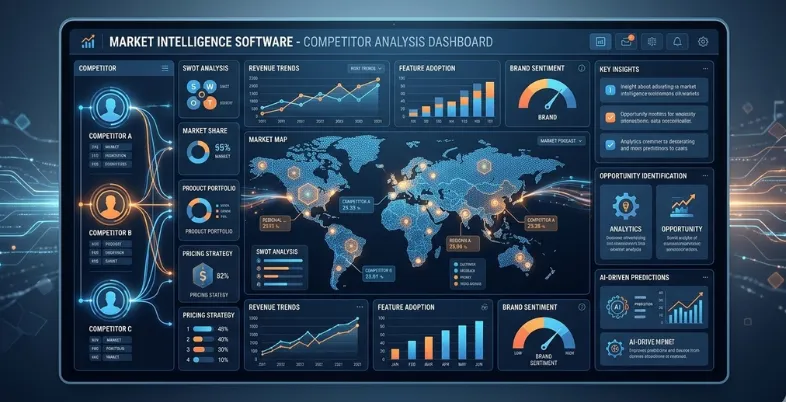
SaaS operations management software is essential in assisting companies cut down on operations, tracking progress, controlling service delivery metering, and improve the efficiency of operations within groups. The instruments are critical to IT administrators, operations managers, developers, project teams, and those involved in support operations that require intelligent monitoring, real-time visibility, and control in highly complex SaaS environments. Due to the increase in the use of distributed teams and cloud-first frameworks, it has never been more essential to have the operation managed by means of integrated, intelligent structures.
These top 10 SaaS operations management tools were chosen with the help of various criteria such as automation, scalability, easy usage, flexibility of integration, the ability to report and analyze, and appropriateness of the tools to the size of the different businesses. Such platforms help teams to work more efficiently, minimize errors, and facilitate smooth cross-functional work whether it comes to incident management, task tracking, asset management, or process automation.
Criteria for Selecting the Best Saas Operations Management Software
The selection criteria of the most efficient SaaS operations management software are given here:
- Core functionality: It is important that the software has necessary capabilities, such as task management, automation of workflows, project tracking, asset management, incident management, and monitoring performance. Select an instrument that can suit your exact operational needs be it ITSM, customer support, or broad operations.
- Scalability: On the platform, the ability to scale up the number of team members, the volume of data, and the complexity of operations should be promoted. Companies must find software that can integrate small and enterprise-level operations, and a latitude to increase the users and the workflows.
- Ease of use: A clean and intuitive user interface ensures team-wide adoption. Favor products that have minimal training and a seamless onboarding process involving both the technical and non-server users.
- Customization and flexibility: Operations differ across organizations. Think about the kind of tool that will enable you to customize workflows, fields, dashboards, and automation that reflect your internal processes.
- Integration capabilities: Ensure that the software suits your existing technology stack (e.g., Slack, Google Workspace, Jira, Salesforce, and so on). Strong integrations minimize silos and improve operational efficiency.
- Collaboration and communication: Efficient operations require smooth collaboration. Look into such characteristics as the ability to real-time comments, notifications, common dashboards, and hub communication.
- Automation and AI: The possibilities of automation and high automation allow for eliminating repetition and increasing productivity. Advice and ideas that use AI can optimize the work process and anticipate bottlenecks, while AI recruiting software can automate candidate screening, ranking, and hiring workflows within people operations.
- Security and compliance: Make sure that the platform fulfills the security standards (e.g. SOC 2, ISO 27001), and regulations inflicted on your sphere, specifically, related to the processing of sensual data.
- Reporting and analytics: Strong reporting capabilities are used to trace important metrics, KPIs, and performance development. Look for customizable dashboards and exportable data features.
- Cost-effectiveness: Compare the total cost of ownership subscription rates, implementation, training, and support. Compare price levels so that you can have utility on what you pay.
Also Read: Top VPN for Android
List of Top 10 SaaS Operations Management Software
1. Jira Service Management
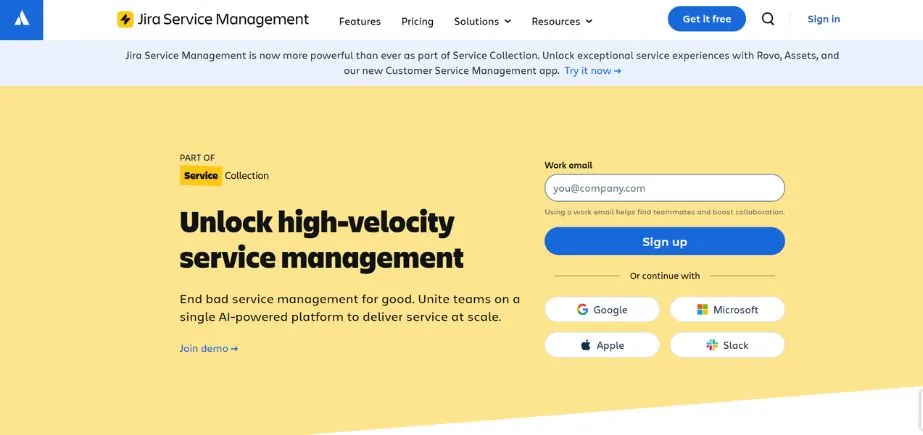
Atlassian Jira Service Management is a contemporary ITSM tool that helps DevOps and service teams carry out the tasks of incident resolution, request management, change, and asset management effectively. It is fully compatible with Jira Software and Confluence so that development and operations can interact easily. It has such features as automation, SLA management, and real-time reporting, which help deliver services quickly and satisfy customers more.
The scale of the tool allows it to be used by a startup company and large commercial organizations. Though powerful, it can be complex for non-technical users. It is most suitable for IT teams that desire agility and cooperation in a formal framework of service management.
Key Features:
- Incident and change management
- Asset and configuration management
- Automation rules and workflows
- SLA tracking and reporting
- Integration with Jira Software and Confluence
Pros:
- Deep integration with Atlassian ecosystem
- Scalable for DevOps and ITSM teams
Cons:
- Steep learning curve for non-tech users
- Can become expensive with add-ons
Pricing:
Starts at $21/agent/month (Standard plan)
Who Should Use It?
IT support teams, DevOps teams, and enterprises managing complex IT services.
2. ServiceNow
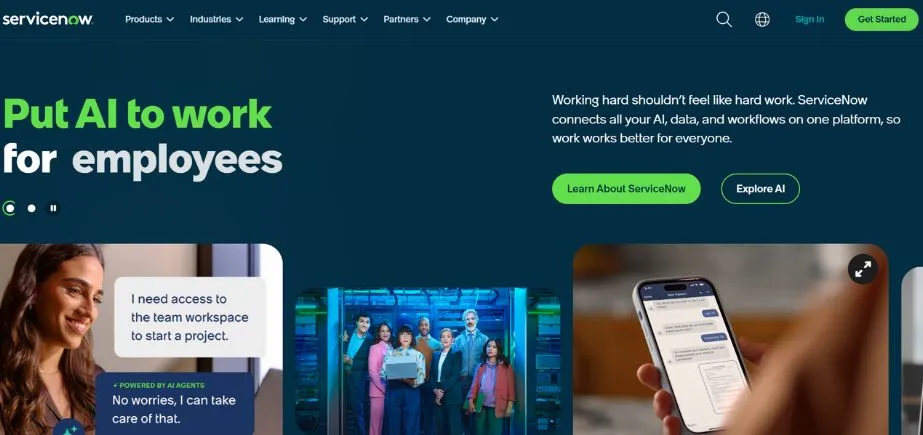
ServiceNow is a suite of enterprise workflow and operation solutions that digitize manual operations to workflows. It has powerful ITSM, HR, and security operations that have made it effective in large enterprises. ServiceNow allows delivering fully efficient service through departments, thanks to its AI-powered virtual agents, real-time analytics, and integration with various applications.
It promotes scale process automation, resolution of incidents, and change. Compared to other SaaS operations management software, it is very powerful and flexible but the cost of implementation is high with the complexity of implementation. ServiceNow is the best fit for companies that require a clear overview of their whole business operations or for companies that require efficiency, consistency as well as quality of services by all the company functions.
Key Features:
- IT operations and asset management
- Automated incident, problem, and change management
- AI-powered virtual agents
- Advanced analytics and dashboards
- Integration with HR, Finance, and Security Ops
Pros:
- Extremely powerful and customizable
- Enterprise-grade automation
Cons:
- High implementation and maintenance cost
- Complex setup and training required
Pricing:
Custom pricing based on modules and usage
Who Should Use It?
Large enterprises with extensive operations and workflow needs across departments.
3. Zendesk
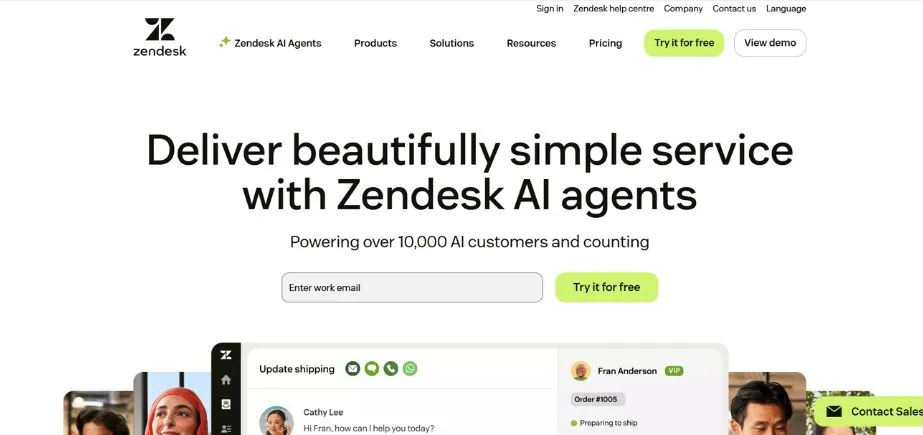
Zendesk is a cloud-based helpdesk and IT operations management software designed to process customer services with regards to assistance and inner IT services simplification. It has a self-service knowledge base, a self-service knowledge base, and AI automation that provides query resolutions efficiently. Zendesk has been created with usability as a consideration and therefore allows support departments to receive requests through a variety of channels such as email, chat, and phone.
Although it provides robust customer engagement functionality, it might not be able to assist in advanced ITSM features like enterprise-level tools. It is most suitable for small and mid-sized organizations that value the quality of customer service and need to have a convenient platform to work with through IT and support.
Key Features:
- Ticketing system with automated workflows
- AI-powered helpdesk tools
- Knowledge base and community forums
- SLA and performance tracking
- Multichannel support (chat, email, phone)
Pros:
- User-friendly interface
- Quick setup with robust support
Cons:
- Limited ITSM depth compared to competitors
- Pricey for feature-rich plans
Pricing:
Starts at $19/agent/month (Suite Team plan)
Who Should Use It?
Support and IT operations teams in SMBs and mid-sized companies.
4. Asana
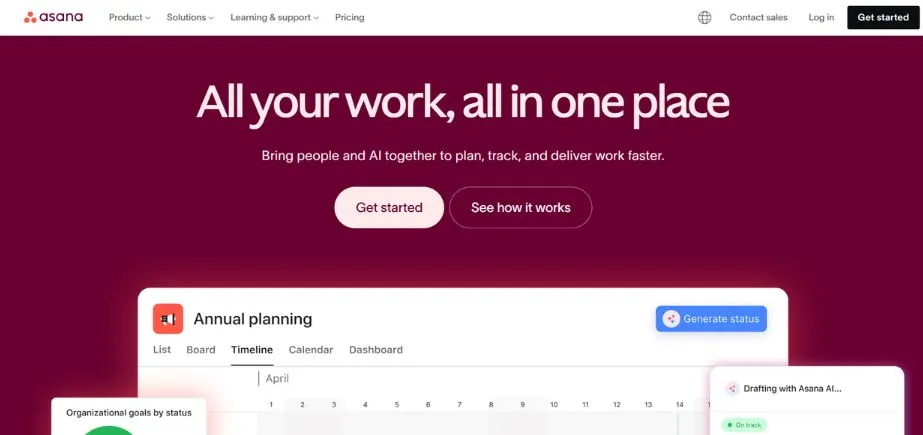
Asana is a dynamic SaaS operations management software, which enables teams to design, manage, and implement projects and repetitive work. It is great in customizable working flows, project timelines, and collaboration tools and is thus being used well in operations as well as project teams. The user-friendly nature of Asana enables groups to display tasks in lists, boards, or calendar forms. It is also merged with more than 200 tools such as Slack, Google Drive, and Zoom.
It has no advanced reporting capabilities and time tracking out of the box, but it does very well in aligning and accountability to teams. Asana can best suit operations managers, marketers, and start-up companies who want to improve their productivity and the visibility of their workflow.
Key Features:
- Task and project tracking with timelines
- Custom workflows and automation
- Reporting and workload view
- Integrations with Slack, Google Workspace, etc.
- Goal and milestone tracking
Pros:
- Intuitive and visually appealing interface
- Great for team collaboration
Cons:
- Limited advanced reporting in lower tiers
- No native time tracking
Pricing:
Free plan available; Premium starts at $10.99/user/month
Who Should Use It?
Operations teams, project managers, and teams seeking visual task management.
5. Monday.com
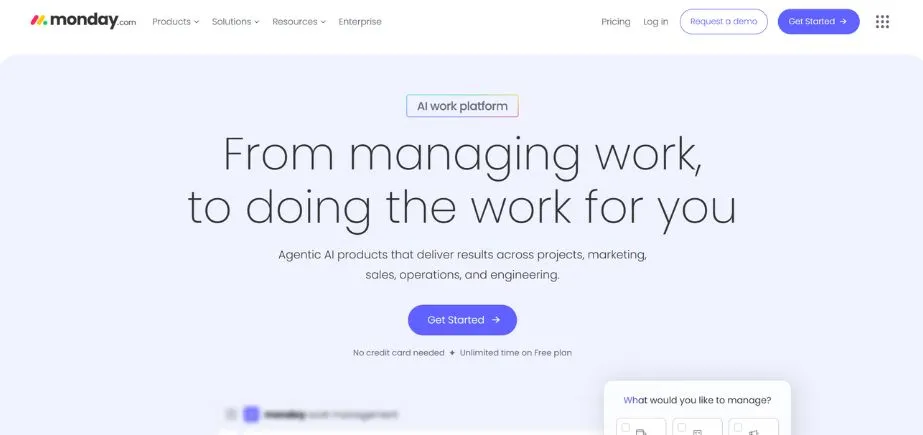
Monday.com is an all-in-one Work OS that assists teams in administering projects, operations, and responsibilities using modifiable workflow and graphical boards. People can monitor the progress, delegate tasks, and standardize repetitive activities within the departments. It handles Gantt charts, time tracking, and dashboards and provides many integrations with third parties.
This SaaS operations management software is technical to a non-technical user because it is modular in design and user-friendly. Although certain features are locked in the premium plans, Monday.com is flexible and scalable. Ideally, it was designed with fast-paced business organizations and cross-functional teams in mind, which seek facilitated and graphically simplified operations management systems.
Key Features:
- Customizable boards and workflows
- Time tracking and automation
- Dashboards and reporting
- CRM and workload management modules
- Extensive third-party integrations
Pros:
- Highly flexible and modular
- Great UI for non-technical users
Cons:
- Can become cluttered with large datasets
- Some features locked behind higher plans
Pricing:
Starts at $9/user/month (Basic plan)
Who Should Use It?
Fast-growing businesses, marketing, and cross-functional ops teams.
Also Read: Top Financial Tools
6. Freshservice
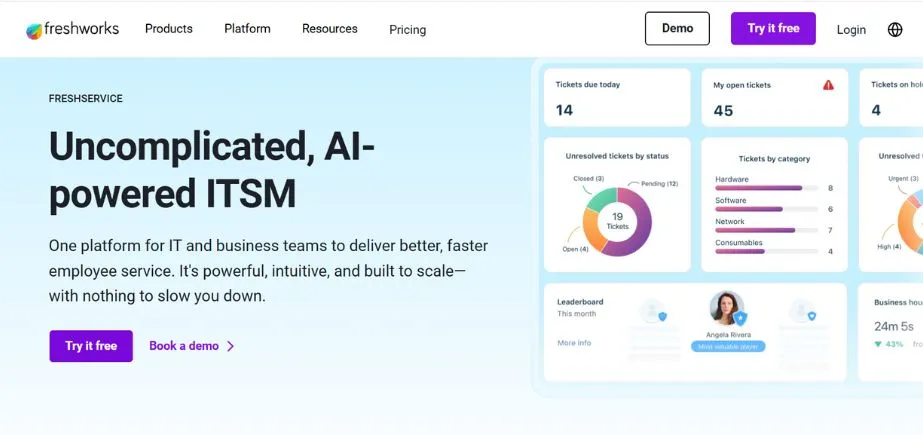
Freshservice Freshworks is a cloud-based ITSM solution prescribed to the IT support and operations department. It is also an out-of-the-box solution with incident management, problem management, change management, and asset management capabilities, as well as automation related to routine operations managed by AI. Freshservice is ITIL compliant and offers a simple clear interface and it is simple to configure and navigate.
It is especially good in companies that are medium-sized and prefer to get a not-so-expensive but strong platform for IT operations. Although the degree of customization may not be that high in entry-level packages, it is a competitive solution that is valuable and quite easy to implement in terms of the IT service desk.
Key Features:
- Incident, problem, and change management
- Asset discovery and tracking
- Automation of repetitive tasks
- AI-based suggestions and chatbots
- ITIL-ready service management
Pros:
- Easy to use with low learning curve
- Affordable compared to competitors
Cons:
- Limited customization in lower plans
- Reporting features could be stronger
Pricing:
Starts at $19/agent/month (Growth plan)
Who Should Use It?
SMBs and mid-sized IT teams looking for a simple and efficient ITSM tool.
7. ClickUp
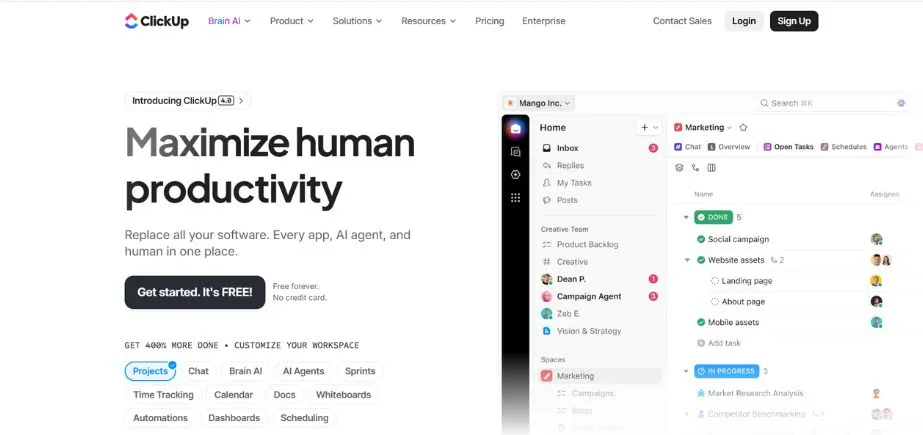
ClickUp is a SaaS operations management software, which allows teams to manage tasks, documents, objectives, and time in a single location. Being super customizable in views (list, board, Gantt, and calendar), ClickUp is applicable to most workflows. The teams can automate simple tasks, edit and make comments on the docs, and follow the performance with goals and dashboards.
It provides considerable customization and there are so many features it can be overwhelming to a new user. ClickUp is an excellent choice of service to work with that will suit work groups that require a versatile platform to monitor projects, and document and execute OKRs in the same service.
Key Features:
- Task and workflow management
- Docs and wikis within projects
- Time tracking and goal setting
- Dashboards and custom views
- Automations and templates
Pros:
- All-in-one workspace with robust features
- Highly customizable
Cons:
- Can feel overwhelming for new users
- Occasional performance issues with large workspaces
Pricing:
Free plan available; Unlimited starts at $7/user/month
Who Should Use It?
Teams looking for flexible operations management with built-in documentation and goals.
8. Airtable
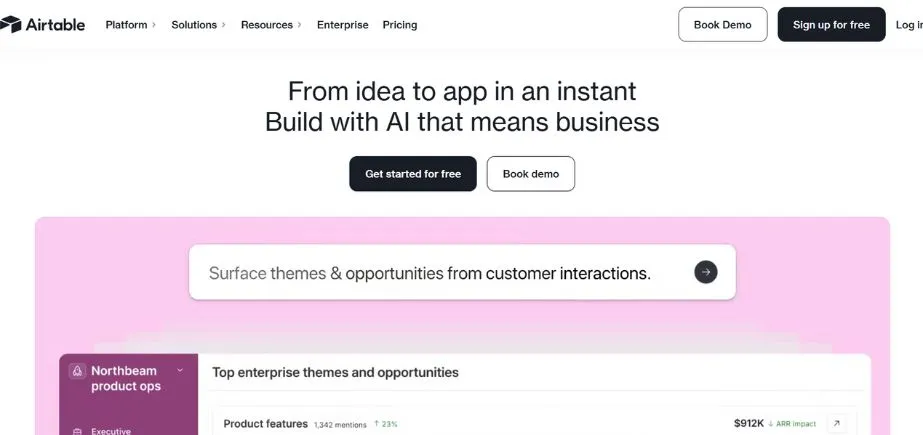
Airtable is a combination of a spreadsheet and a database that enables teams to organize operations, manage projects, and structure information easily. It supports customizable views which include grid, Kanban, calendar, and gallery and it supports different types of use cases which include content calendars, CRM, and asset tracking. Airtable has automation and integrations with appealing apps such as Slack and Zapier.
Although it is user-friendly and very graphic, its reporting and size can be restrictive to the intricate enterprise requirements. Airtable is perfect when there are small to mid-sized teams that require a modular, visually-oriented tool to accomplish operational workflows with a light technical backstop.
Key Features:
- Table and kanban-style views
- Custom fields and templates
- Real-time collaboration
- Powerful filtering and grouping
- Integration with apps via Airtable Automations
Pros:
- Easy for spreadsheet users to adopt
- Great for structured, data-heavy ops
Cons:
- Limited native reporting
- May not scale well for complex use cases
Pricing:
Free plan available; Plus plan starts at $10/user/month
Who Should Use It?
Startups and SMBs managing structured projects and asset data.
9. Wrike
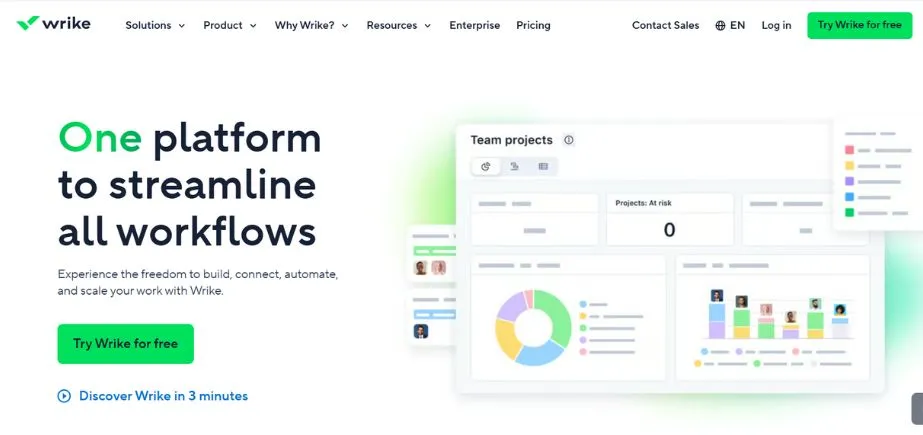
Wrike is an efficient work and project management system, which is aimed at improving collaboration, reporting, and resource management. Its functionalities are a time tracker, workload management, dashboards, and advanced analytics. Wrike supports cross-functional teams on the marketing, IT, and operations teams and is popular among teams who do a lot of complex projects.
This SaaS operations management software is connected with such tools as Salesforce, Microsoft Teams, and Adobe Creative Cloud. It has a learning curve and can be expensive as it scales since it is feature-rich. Wrike is most applicable to organizations that require a structured workflow management, high reporting capabilities, and real-time information on the project performance.
Key Features:
- Project templates and workflows
- Time tracking and budgeting tools
- Dashboards and analytics
- Cross-department collaboration
- Integration with Salesforce, Adobe, etc.
Pros:
- Strong reporting and analytics
- Good for team scalability
Cons:
- Steeper learning curve
- Can be expensive for advanced features
Pricing:
Free plan available; Team plan starts at $9.80/user/month
Who Should Use It?
IT, marketing, and operations teams managing multiple cross-functional projects.
10. Process Street
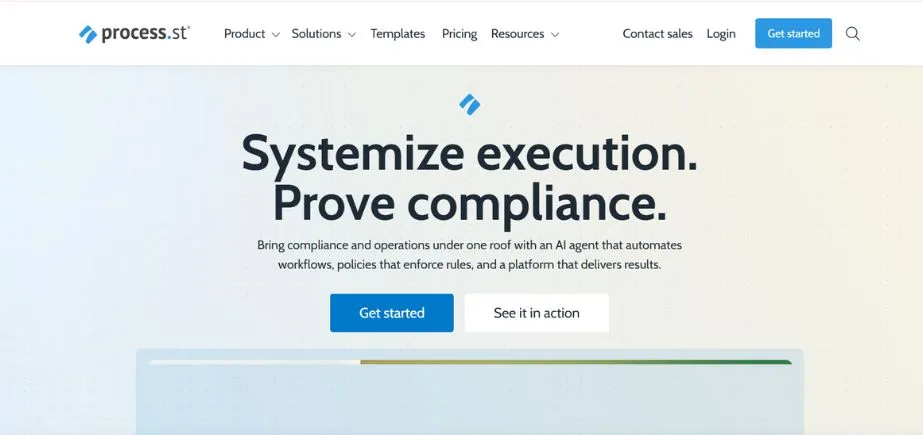
Process Street is a workflow and SOP ( Standard Operating Procedure ) software created to allow teams to automate their routine by using interactive checklists. It is conditional, role-based, and form-data oriented and hence can be well suited to enter operational processes like onboarding, approvals, and audits. Its user interface is no-code based which permits users to configure and edit workflows with high speed.
Although it is not designed to manage dynamic projects, it is superb in repetitive processes. This SaaS operations management software will specifically help operations teams automate their repetitive tasks, be compliant in operations, and have a lot of consistency across processes without involving the technical staff.
Key Features:
- Checklist-based workflow automation
- Conditional logic and dynamic fields
- Role-based assignments
- Form and data collection
- Integrations with 1000+ apps via Zapier
Pros:
- Perfect for SOP and checklist-driven ops
- Easy to implement and scale
Cons:
- Not ideal for non-repeatable tasks
- Limited analytics features
Pricing:
Starts at $100/month for 5 users (Pro plan)
Who Should Use It?
Operations teams managing repetitive tasks, onboarding, and procedural workflows.
Conclusion
SaaS operations management software provides insights into successful, scalable, and automatized business operations at the departmental level. Being the most outstanding platforms in terms of IT service management and incident response tackling, Jira Service Management, and Freshservice have one of the strongest capabilities when it comes to ticketing, assets tracking, and change management. Teams willing to have more flexibility and adaptability of project and workflow tools can choose Monday.com and Asana.
The rich automation and business-level features mean that the two software (ServiceNow and Wrike) will be particularly helpful in the complicated operational needs of large companies. ClickUp or Airtable might be a perfect solution to connect a team that has a smaller size or rapid growth and requires a balance between versatility and ease of use.
Process Street is an especially useful tool for teams that deal with routine checklists and SOPs. After all, the tool that will be used most suitably depends on the scope, the level of technology, and whether it is mandatory to cooperate or automate. The right SaaS operations management software implies that there will be more visibility, less friction in the operations, and more harmonization of the business functions.
Continue Reading: Top Cold Email Platforms
FAQs
1. What is SaaS operations management software?
The SaaS operations management software assists an organization in the management, automation, and optimization of its daily business operations, workflows, and services as a cloud-based platform. It is widely applied in the management of IT services, project control, task management, assets management, as well as performance.
2. Who are SaaS operations management tools aimed at?
These are ideal tools that would work in an IT team, project managers, an operations team, the customer service department, or any other business that wants to streamline its process, collaborate effectively among staff, and manage its workflow efficiently.
3. What is the difference between SaaS operations management software and project management tools?
Whereas project management applications are related to the planning and implementation of a particular project, operations management software offers a more universal direction in persistent business processes, such as automating a business, controlling a business service, asset management, and process improvement.
4. Will these tools be able to combine with other business systems?
Yes, the majority of SaaS operations platforms support integrations with such tools as Slack, Microsoft Teams, Google Workspace, Jira, Salesforce, and others to promote connecting workflow versions and sharing information among the teams.
5. What do I have to consider when deciding on software to use in my business?
Look at the size of the team, budget, integration requirements, functionalities, scalability, and usability. Taking free trials or demos can also be beneficial to see whether to adopt a solution or not.