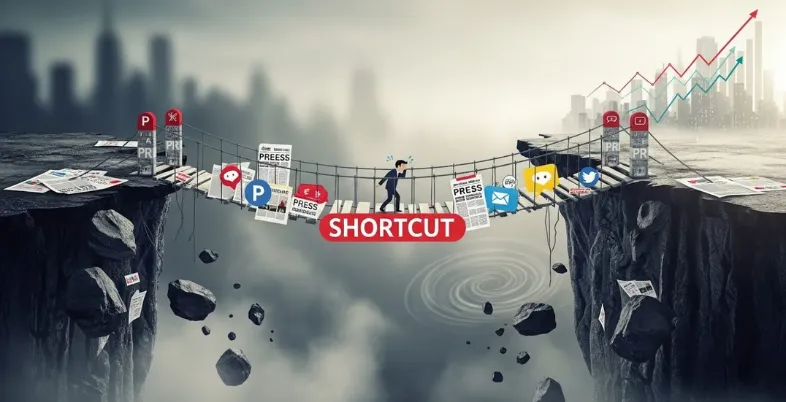
PR can help a business grow. But PR marketing services become risky fast when they’re used as a substitute for real traction.
The shortcut pitch is always the same: get a few big logos, get a few “As seen in” placements, look bigger than you are, and let credibility do the selling. Sometimes it works for a minute. Then the bill comes due.
And it usually shows up as wasted spend, shaky trust, or coverage that looks impressive until someone checks the fine print.
What PR Marketing Services Are Supposed to Do
At their best, PR marketing services help you earn attention you couldn’t buy outright. That includes:
- Media outreach that leads to real editorial coverage
- Thought leadership that positions a founder or brand as credible
- Crisis support when narratives start turning
- Relationship-building with writers, editors, and producers
- Brand visibility that supports search results and reputation signals
That’s the good version. The risky version is when PR gets treated like a growth hack. When “coverage” is the product, not the outcome.
NetReputation sees this a lot from brands that come in after a PR sprint. The company name is suddenly everywhere, but the search results feel off. The coverage looks thin. The reviews and third-party signals don’t match the hype. That mismatch is where reputations start to crack.
Why the Shortcut Is So Tempting
PR feels like a lever you can pull once and benefit from forever.
A single headline can:
- create instant legitimacy in sales conversations
- change how investors perceive the brand
- influence what shows up in search results
- make prospects stop questioning and start trusting
That’s exactly why shortcuts are dangerous. If the credibility isn’t genuine, the exposure becomes a spotlight.
Risk 1: High Costs With Nothing Solid to Point To
PR retainers and placement packages are expensive, and the ROI is often fuzzy by design.
A typical pattern:
- You pay for outreach, press release distribution, “strategy,” and reporting
- You get a monthly deck full of impressions and reach
- Revenue doesn’t move, or it moves in ways that can’t be attributed
- The contract makes it hard to exit quickly
PR can’t be measured the same way as paid media, but that doesn’t mean it gets a free pass. If the only proof is “awareness,” the service is running on vibes.
What to demand instead
- a clear definition of what counts as earned editorial vs sponsored
- a list of target outlets that makes sense for your industry (not just famous names)
- reporting that includes brand search lift, SERP changes, and lead quality trends, not only reach
Risk 2: “Guaranteed Coverage” That’s Technically True and Practically Worthless
“Guaranteed placements” are one of the biggest traps in PR marketing services.
Guaranteed usually means one of these:
- paid advertorials placed in sections most readers ignore
- contributor networks that look like editorial but function like pay-to-play
- third-party sites with inflated metrics and no real audience
- syndication that multiplies copies of the same weak piece across junk domains
None of that builds trust the way real editorial does. Worse, it can backfire. Prospects recognize it. Journalists recognize it. Search engines recognize it.
Simple test: if the placement disappears the moment the payment stops, it’s not reputation-building. It’s rented credibility.
Risk 3: Authenticity Gets Damaged, Even If Nobody Calls It Out
Manufactured PR rarely causes an immediate scandal. It causes something quieter: skepticism.
People don’t always say, “This looks fake.” They just behave like it.
They:
- hesitate longer
- Click competitor results instead
- search your brand name with “reviews” or “scam” attached
- screenshot the “As seen in” section and laugh in a group chat
The modern buyer is trained to question polished narratives. When PR reads like a performance, it creates distance instead of trust.
This is where reputation work becomes hard. NetReputation often deals with the after-effects: the brand isn’t “canceled,” but the search results start telling a confusing story that prospects don’t want to untangle.
Risk 4: Short-Term Hype Creates Long-Term Dependence
PR spikes are real. They just fade.
If growth depends on the next hit of coverage, the strategy turns into a treadmill:
- bigger pitches
- louder angles
- more extreme claims
- more pressure on the agency to “land something.”
That leads to riskier decisions, especially when a brand starts stretching the truth to sound newsworthy.
The collapse pattern is familiar: massive visibility, weak foundation, then the narrative flips. When the pressure turns critical, there isn’t enough real trust built up to absorb it.
Risk 5: Legal and Compliance Problems That Brands Don’t See Coming
Shortcut PR is where brands accidentally step into regulatory trouble.
Common triggers:
- paid placements that aren’t disclosed clearly
- influencer posts without proper sponsorship language
- exaggerated claims in press releases
- fake reviews, fake endorsements, or “reputation boosting” tactics from shady vendors
The risk isn’t theoretical. Once credibility is questioned publicly, legal exposure becomes part of the story.
A practical safeguard
- require disclosure language in all influencer and partner agreements
- ban fake reviews and “review gating” in writing
- verify that media lists and outreach practices respect privacy laws and opt-in standards
- force proof for any claim used in press materials
Real-World Failures That Show the Pattern
PR didn’t cause these failures, but PR amplified them until reality couldn’t keep up:
- Theranos: prestige coverage created a halo effect that collapsed when the underlying claims were tested.
- Fyre Festival: influencer-driven hype turned into a public meltdown, lawsuits, and long-term reputational damage.
- Juicero: glossy press couldn’t protect a product that didn’t hold up to scrutiny.
The lesson isn’t “never do PR.” The lesson is “PR multiplies whatever is already true.” If the foundation is weak, the exposure speeds up the fall.
Healthier Paths That Don’t Rely on Rented Credibility
Strong growth rarely comes from one headline. It comes from repeatable proof.
Better alternatives to the shortcut version of PR marketing services:
Build Owned Authority First
Create content that answers the questions prospects search right before they buy. Not “brand storytelling.” Actual decision-making content.
Earn Coverage That Fits Your Real Footprint
Industry trades, niche podcasts, credible newsletters, and local outlets can be more valuable than a famous logo that has nothing to do with your market.
Invest in Reputation Signals That Support Search
Reviews, third-party profiles, accurate brand listings, and consistent messaging matter because they show up everywhere. This is where NetReputation’s approach fits naturally: reputation isn’t a press hit. It’s what people see repeatedly, across sources, over time.
Use PR to Confirm Momentum, Not Fake It
PR works best when it documents what’s already happening:
- customer results
- meaningful hires
- measurable product wins
- partnerships that matter
- data that’s real and specific
A Simple Gut Check Before Paying for PR Marketing Services
If the pitch sounds like:
- “instant credibility”
- “guaranteed placements”
- “we’ll get you featured in Forbes”
- “everyone will start trusting you”
That’s not PR. That’s a shortcut being sold as a strategy.
Real PR is slower, cleaner, and more selective. It supports growth. It doesn’t replace it.