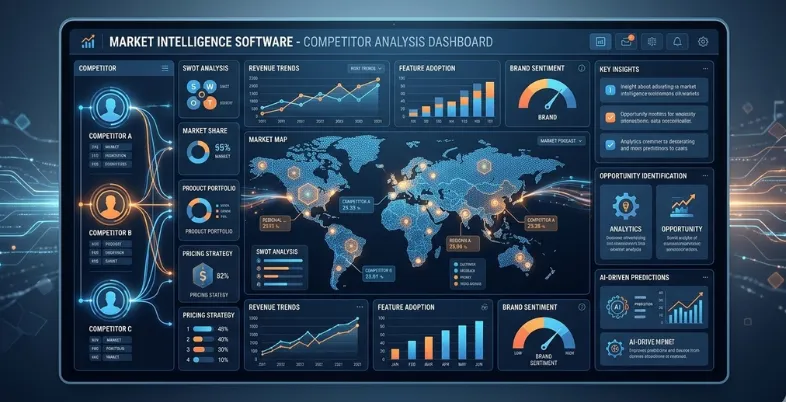
Businesses today operate in highly competitive and rapidly evolving markets where understanding industry trends, customer behavior, and competitor strategies has become more important than ever. Companies must continuously monitor market shifts, emerging technologies, and changing consumer preferences to stay ahead. However, gathering and analyzing large volumes of data from news sources, social media, industry reports, websites, and digital platforms can quickly become overwhelming when done manually. Without reliable insights, organizations may struggle to make informed strategic decisions or identify new opportunities for growth.
This is where market intelligence software becomes extremely valuable. These platforms collect, organize, and analyze market data from multiple sources, providing businesses with actionable insights and real-time competitive awareness.
Why Businesses Need Market Intelligence Tools
Market intelligence tools are essential to businesses to remain competitive in the current rapid and data-driven market. These tools gather and examine data on various sources including competitors, customers, industry reports, social media and online platforms with the help of web data scraping tools. Market intelligence software helps organizations gain knowledge on market trends, customer preferences and identify new opportunities by converting bulk raw data to useful insights.
Firms are able to track competitor strategies, monitor product introductions and establish potential risks to performance before they occur. This will enable the decision-makers to create even better marketing strategies, their product development, and also how to utilize the resources in a prudent manner.
Market intelligence tools also facilitate easier and better-informed decisions by assisting businesses in predicting the demand changes and acting in advance. In the end, they are able to facilitate long-term expansion, innovation and strategic planning in ever more competitive global markets.
Factors To Consider Before Choosing Market Intelligence Software
- Data Sources Coverage: Make sure that the platform collects insights on a wide range of sources such as competitors, industry reports, social media, news, and customer behavior data.
- Analytics and AI Capabilities: Assess the ability of the software to offer advanced analytics, predictive analytics and AI-assisted suggestions to make more effective strategic choices.
- Ease of Use: Select tools that have user-friendly dashboards, have easy navigation and low learning curve among the marketing, sales and strategy departments.
- Integration: Check the compatibility with CRM, marketing automation services, analytics tools, and the existing business software so that the data-sharing and workflows could be easily integrated.
- Real-Time Monitoring: Find out aspects that give instant alerts and updates regarding competitor activities, market trends and industry developments.
- Customization and Reporting: Make sure that the platform can allow users to create custom dashboards, custom reports, and custom intelligence feeds depending on business goals.
- Scalability: Choose software that will be able to support increasing data volumes, larger workforce and changing market intelligence requirements over time.
- Pricing and ROI: Compare pricing plans with each other and evaluate whether the platform can provide tangible value in terms of better insights and business performance.
Quick Comparison
| Name | Best For | Data Sources Supported | Ease of Use | Pricing |
| AlphaSense | Financial research and enterprise intelligence | Financial filings, earnings calls, analyst reports, news, expert interviews | Moderate | Request Pricing |
| Klue | Competitive intelligence for sales teams | Competitor websites, reviews, news, internal sales data | Easy | Contact Sales |
| Crayon | Competitor monitoring and sales enablement | Websites, marketing campaigns, pricing updates, product releases | Easy | Contact Sales |
| Similarweb | Website traffic and digital market analysis | Website traffic data, search trends, audience analytics | Easy | From $199/month |
| Contify | Enterprise market monitoring | News sites, company websites, filings, social media | Moderate | Contact Sales |
| Semrush | SEO and digital marketing intelligence | Search engines, keywords, backlinks, advertising data | Moderate | From $139.95/month |
| CB Insights | Startup and technology market research | Funding databases, patents, acquisitions, startup data | Moderate | Request Pricing |
| Brandwatch | Social media and consumer sentiment analysis | Social networks, blogs, forums, news platforms | Moderate | Contact Sales |
| Kompyte | Automated competitor tracking | Competitor websites, marketing updates, product releases | Easy | Request Pricing |
| Demandbase | Account-based marketing insights | Firmographic data, intent signals, B2B marketing data | Moderate | Contact Sales |
| ZoomInfo | B2B lead generation and sales intelligence | Company databases, contact data, buying intent signals | Easy | Contact Sales |
| Owler | Competitor company monitoring | Company profiles, news updates, funding announcements | Very Easy | From $468/year |
| Ahrefs | SEO competitor analysis | Backlinks, keyword rankings, website traffic data | Easy | From $129/month |
| AppTweak | Mobile app market analysis | App store rankings, keyword data, competitor apps | Easy | From $99/month |
| Adthena | Paid search and PPC intelligence | Search advertising data, keyword bidding insights | Moderate | Custom Pricing |
List of 15 Best Market Intelligence Software
1. AlphaSense
Website: https://www.alpha-sense.com/
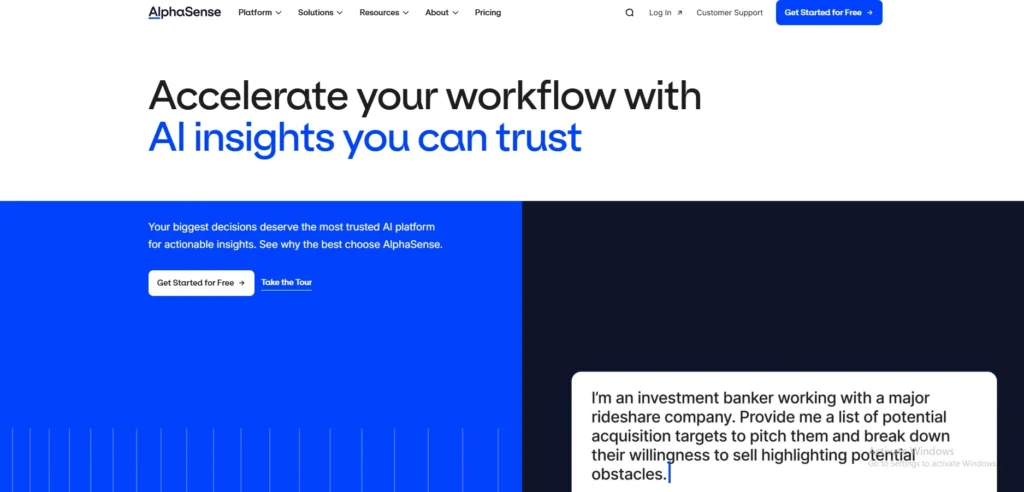
AlphaSense is an artificial intelligence-driven market intelligence and financial research platform applied by firms, investment and advisory firms, as well as consultancies around the globe. The site gathers millions of pieces of data such as earnings call transcripts, company filings, analyst reports, news stories, and interviews with experts to provide extensive market knowledge.
Intelligent semantic search and natural-language processing assist analysts in getting the information and emerging trends within a short time. AlphaSense is utilized by businesses to keep track of competition, industry analysis, and strategic decision-making.
The platform also has collaboration capabilities and customizable dashboards that can help a team to manage research effectively. AlphaSense is a market intelligence tool that can be used by market intelligence professionals due to its broad data coverage and AI analytics.
Key Features:
- AI-powered semantic search technology
- Extensive financial documents database
- Earnings call transcript analysis tools
- Expert insights and interview library
- Real-time alerts for market developments
- Collaborative research workspace features
Pros:
- Highly accurate AI research capabilities
- Comprehensive financial and industry datasets
- Powerful enterprise-grade search functionality
- Excellent insights for investment research
- Strong collaboration and sharing tools
Cons:
- Premium pricing for enterprise users
- Complex features require training initially
- Primarily focused on financial industries
Pricing:
- Request Pricing
2. Klue
Website: https://klue.com/
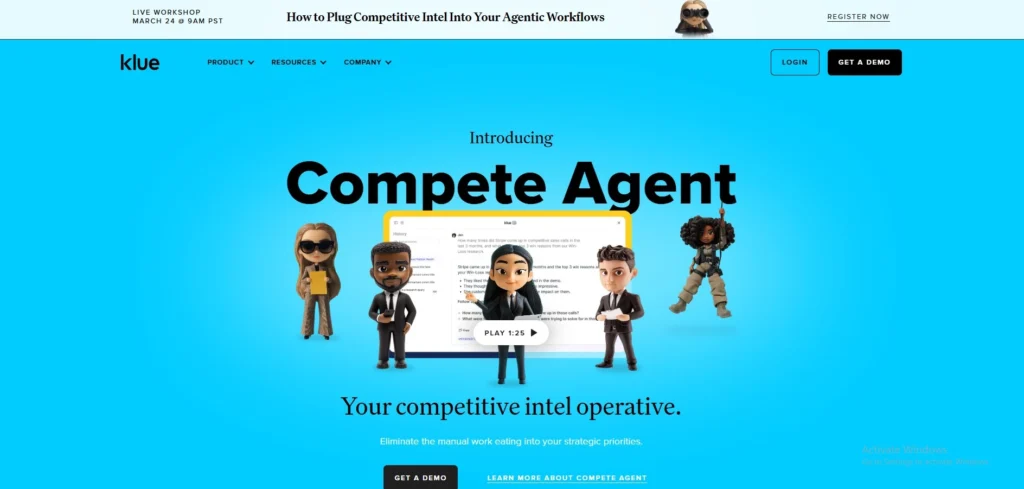
Klue is a competitive and market intelligence platform which is mostly used by product marketing, sales and strategy teams. The software gathers competitor information automatically on websites, news, reviews, social media, and internal sales insights.
It converts this information into actionable intelligence including competitive battlecards, win-loss insights, and real-time alerts that assist sales teams to react efficiently when dealing with deals using Market Intelligence Software. Klue is interconnected with applications such as CRMs and collaboration systems, where intelligence is distributed throughout the departments.
Organizations use Klue to monitor competitor tactics, comprehend market forces, and enhance go to market planning. The automation and systematized insights it provides enable companies to be in touch with the times and competitive in fast-changing markets.
Key Features:
- Automated competitor intelligence collection
- Dynamic competitive sales battlecards
- Real-time competitor monitoring alerts
- Win-loss analysis reporting tools
- Integrations with CRM platforms
- Internal knowledge sharing hub
Pros:
- Excellent tool for product marketing teams
- Centralized competitor intelligence repository
- Helps sales teams win deals faster
- Automated insights reduce manual research
- Strong integration with business tools
Cons:
- Limited capabilities beyond competitive intelligence
- Setup process can take time
- Pricing may be high for startups
Pricing:
- Contact sales
3. Crayon
Website: https://www.crayon.co/
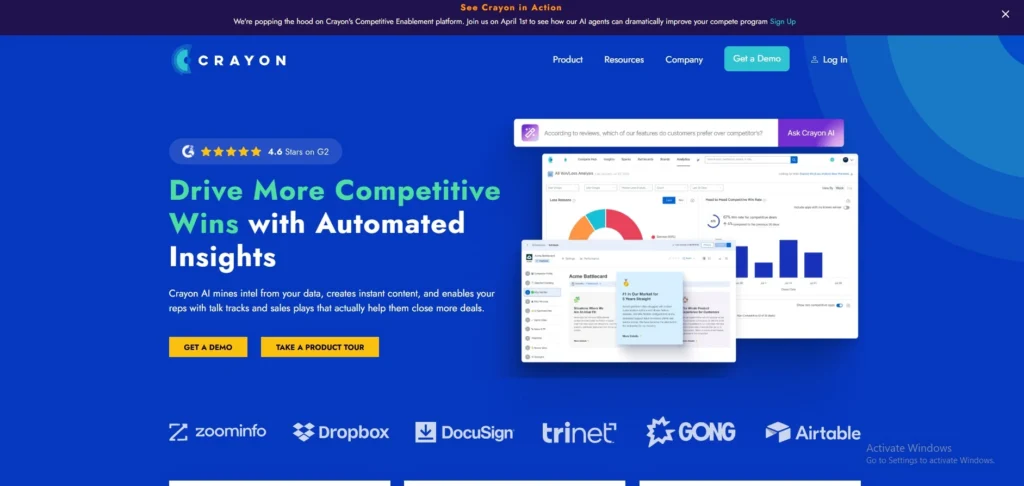
Crayon is a competitive intelligence and market tracking platform which is a dominant player in the market and is utilized by product, revenue, and marketing teams. The software keeps tracking websites of competitors, marketing campaigns, price changes and product updates on thousands of online sources.
It translates this information into data that can be used by the companies to adjust positioning, sales messaging and product strategy. Crayon also offers sales teams customizable dashboards, automated alerts and dynamic battle cards.
The platform enables organisations to respond promptly to changes in the market, by ensuring the competitor intelligence is centralized in a single system. Companies also enjoy a better understanding of competitor actions and strategic movements, and make decisions that are more informed and competitive.
Key Features:
- Continuous competitor activity tracking
- Automated marketing campaign monitoring
- Competitive intelligence dashboards
- Real-time change detection alerts
- Sales enablement battlecards creation
- Centralized competitor insights database
Pros:
- Comprehensive competitor monitoring system
- Easy-to-understand intelligence dashboards
- Helps sales teams prepare competitive responses
- Tracks thousands of competitor signals
- Strong collaboration capabilities
Cons:
- Advanced features require premium plans
- Initial setup may require configuration
- Heavy focus on competitor intelligence
Pricing:
- Contact sales
4. Similarweb
Website: https://www.similarweb.com/
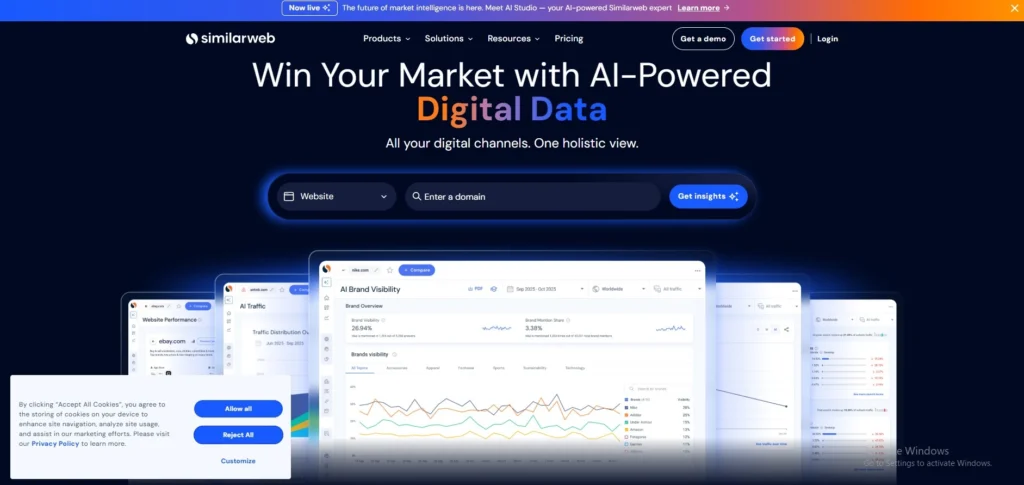
Similarweb is an online Market Intelligence Software that gives insights on the traffic of the websites, online market share and market behavior. The software assists businesses to study rival websites, establish areas of traffic, and analyze digital marketing plans.
Its massive data ecosystem enables its users to compare the performance of any industry and monitor its audience engagement patterns. Similarweb is used to help marketing teams identify new growth opportunities, optimize their campaigns, and know how their customers engage with the internet.
The analytics dashboards and reports presented on the platform assist organizations to analyse competitors and gauge market demand. Having a wide coverage of data on the internet, Similarweb allows companies to make the data-driven decision in online markets that are highly competitive.
Key Features:
- Website traffic analytics insights
- Digital market share tracking
- Audience behavior and demographics data
- Keyword and search analysis tools
- Competitor website benchmarking tools
- Industry market trends reporting
Pros:
- Massive global digital data coverage
- Easy competitor traffic comparison tools
- Valuable insights for marketing teams
- Accurate digital market intelligence data
- Useful dashboards for performance tracking
Cons:
- Free version has limited insights
- Some smaller sites have less data
- Premium plans can be expensive
Pricing:
- Competitive Intelligence- $199 per month
- Competitive Intel & SEO & AEO- $399 per month
- Competitive Intel, SEO & AEO & Ads- $649 per month
5. Contify
Website: https://www.contify.com/
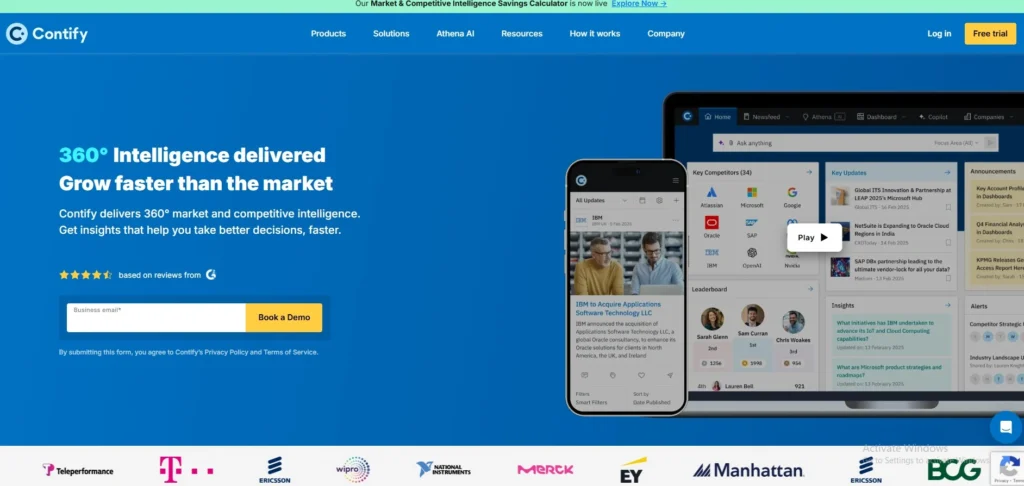
Contify is an enterprise-grade market intelligence platform designed to help organizations monitor competitors, customers, and industry developments. The software gathers information from thousands of sources such as news sites, company websites, regulatory filings, and social media channels.
Using artificial intelligence and natural language processing, Contify filters large volumes of data and converts them into relevant insights. Users can create customized dashboards to track competitors, market segments, or specific trends.
The platform also delivers automated alerts and newsletters that keep teams updated on important developments. Contify helps businesses strengthen strategic planning, competitive analysis, and market research by providing structured intelligence from diverse information sources.
Key Features:
- AI-driven market intelligence feeds
- Competitor and industry monitoring
- Custom intelligence dashboards creation
- Automated alerts and newsletters
- Multi-source data aggregation engine
- Research workflow management tools
Pros:
- Strong enterprise intelligence automation
- Highly customizable market tracking feeds
- Supports strategic decision-making processes
- Excellent monitoring of industry developments
- Scalable platform for large organizations
Cons:
- Learning curve for new users
- Premium pricing for enterprise plans
- Smaller businesses may find excessive
Pricing:
- Contact sales
6. Semrush
Website: https://www.semrush.com/
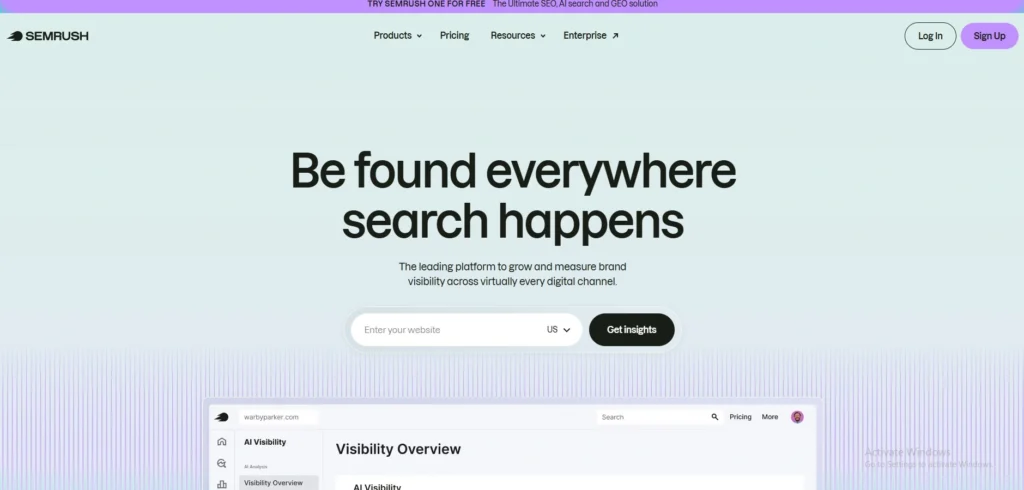
Semrush is a comprehensive digital marketing and market intelligence platform widely used by businesses, marketers, and agencies. The software offers powerful tools for keyword research, competitor analysis, backlink monitoring, and advertising research.
By analyzing search data and website performance, Semrush enables companies to understand market demand and competitor strategies. Users can identify profitable keywords, monitor search rankings, and evaluate advertising campaigns across multiple channels.
The platform also provides website auditing, content optimization suggestions, and competitive benchmarking features. Businesses rely on Semrush to improve online visibility, analyze digital competition, and make strategic marketing decisions based on reliable market intelligence data.
Key Features:
- Comprehensive keyword research database
- Competitor SEO and PPC analysis
- Backlink tracking and link auditing
- Website technical SEO audit tools
- Content marketing optimization toolkit
- Advertising intelligence analytics
Pros:
- One of the largest SEO databases
- Excellent competitor marketing insights
- Wide range of marketing tools
- Useful reports for digital strategies
- Suitable for agencies and businesses
Cons:
- Interface may feel overwhelming initially
- High subscription costs for advanced plans
- Data occasionally differs from search engines
Pricing:
- Pro- $139.95/mo
- Guru- $249.95/mo
- Business- $499.95/mo
7. CB Insights
Website: https://www.cbinsights.com/
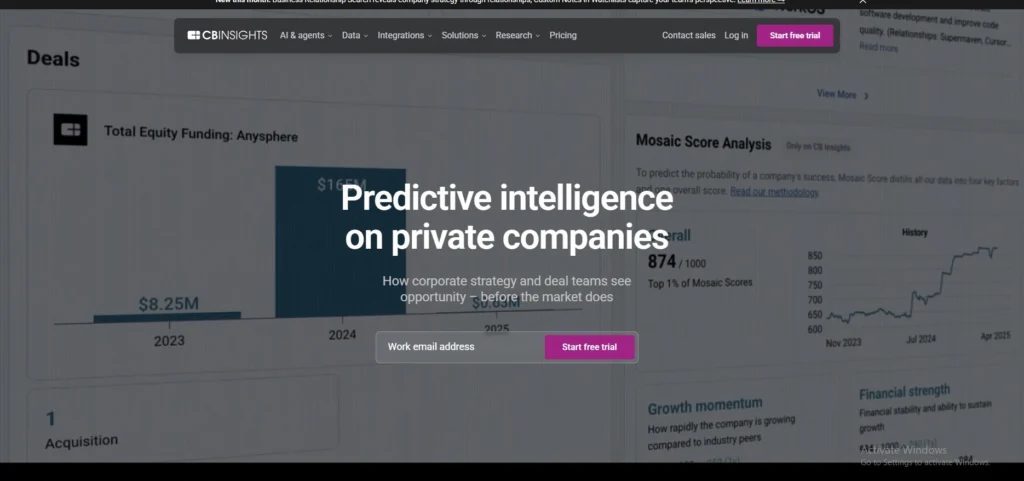
CB Insights is a technology market intelligence platform that provides insights into startups, venture capital investments, and emerging industry trends. The platform analyzes vast datasets related to funding activity, acquisitions, patents, and company growth patterns.
Businesses, investors, and consultants use CB Insights to identify disruptive technologies, evaluate market opportunities, and track competitive landscapes. Its analytics dashboards provide visualizations of industry developments and innovation clusters.
Organizations rely on the platform’s predictive insights to anticipate future market movements and make informed strategic decisions. CB Insights is particularly valuable for companies exploring innovation ecosystems and identifying potential investment or partnership opportunities in fast-growing technology sectors.
Key Features:
- Startup and venture funding analytics
- Technology trend forecasting insights
- Company profiles and investment tracking
- Innovation and disruption intelligence reports
- Patent and acquisition monitoring tools
- Market opportunity analysis dashboards
Pros:
- Excellent for innovation research
- Strong startup ecosystem intelligence
- Detailed funding and investment data
- Useful reports for strategic planning
- Powerful visual analytics dashboards
Cons:
- Expensive subscription pricing tiers
- Best suited for enterprise research teams
- Data access limited without subscription
Pricing:
- Request pricing
8. Brandwatch
Website: https://www.brandwatch.com/
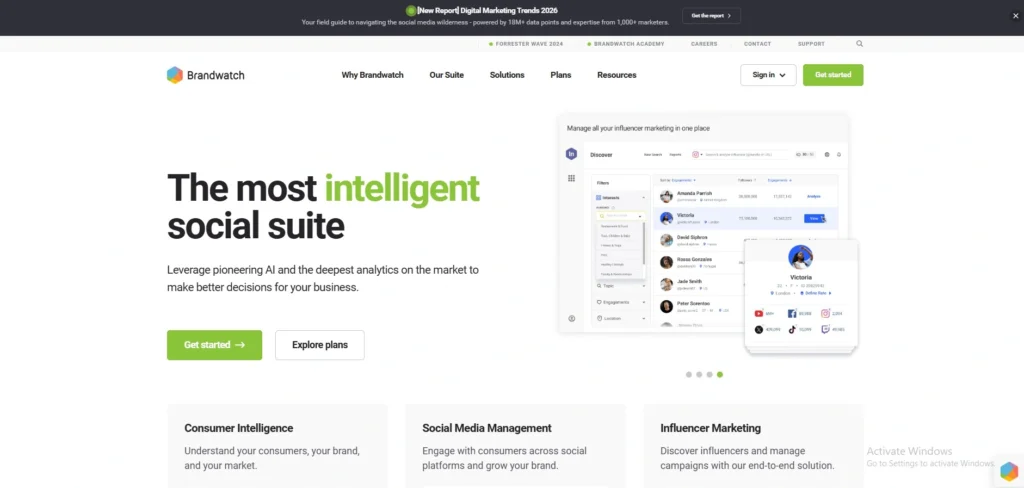
Brandwatch is a consumer and market intelligence platform that analyzes social media conversations and digital content to uncover market trends and public sentiment. The software collects data from millions of online sources including social networks, forums, blogs, and news sites.
Using AI-driven analytics, Brandwatch helps businesses understand how consumers perceive brands, products, and competitors. Marketing teams use these insights to improve campaigns, identify emerging trends, and monitor brand reputation.
The platform also offers customizable dashboards and visual reports for tracking audience engagement and sentiment patterns. By transforming online conversations into actionable insights, Brandwatch supports better marketing and strategic decision-making.
Key Features:
- Social media conversation analytics
- Consumer sentiment analysis dashboards
- Trend detection across digital platforms
- Brand reputation monitoring tools
- AI-powered audience insights reporting
- Social listening data visualization
Pros:
- Powerful consumer sentiment analytics
- Large social media data coverage
- Real-time monitoring of brand perception
- Useful insights for marketing strategies
- Strong visualization and reporting tools
Cons:
- Enterprise pricing may be expensive
- Requires expertise for deeper analysis
- Limited usefulness outside marketing teams
Pricing:
- Contact sales
9. Kompyte
Website: https://www.kompyte.com/
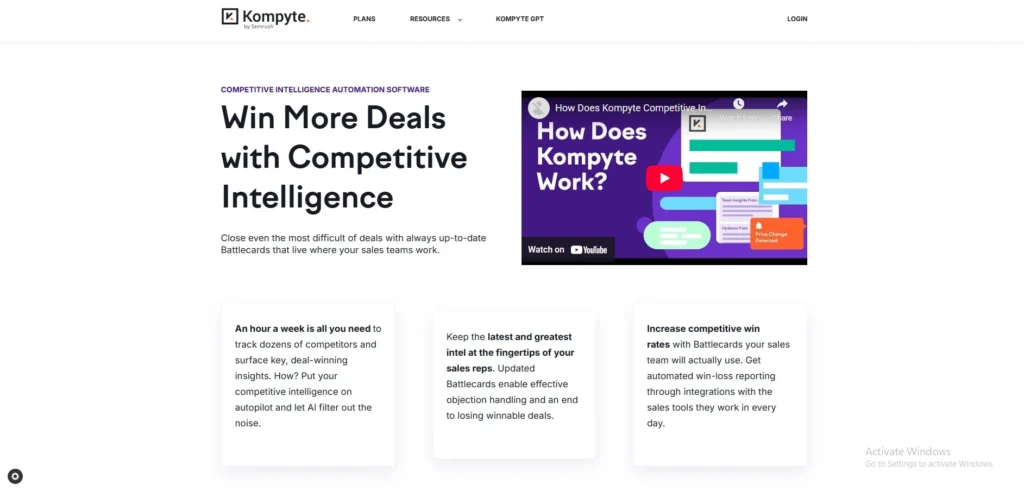
Kompyte is a competitive intelligence platform that automatically tracks competitor activity across digital channels. The software monitors competitor websites, product updates, marketing campaigns, and pricing changes, then organizes the information into actionable insights.
Businesses use Kompyte to generate competitive battlecards and receive alerts about important competitor developments. The platform integrates with CRM systems and collaboration tools so sales and marketing teams can easily access intelligence during strategic planning or customer conversations.
By automating competitor monitoring, Kompyte saves time and reduces manual research. Organizations benefit from clearer visibility into competitor strategies and can quickly adapt their own positioning in the market.
Key Features:
- Automated competitor monitoring engine
- Website change detection tracking
- Competitive sales battlecards generator
- Marketing campaign competitor insights
- CRM integrations for sales intelligence
- Centralized competitor knowledge repository
Pros:
- Automates manual competitor research tasks
- Provides timely competitor activity alerts
- Useful for sales enablement strategies
- Easy integration with CRM tools
- Improves market response speed
Cons:
- Limited broader market research features
- Smaller dataset compared to large platforms
- Some automation requires customization
Pricing:
- Request Pricing
10. Demandbase
Website: https://www.demandbase.com/
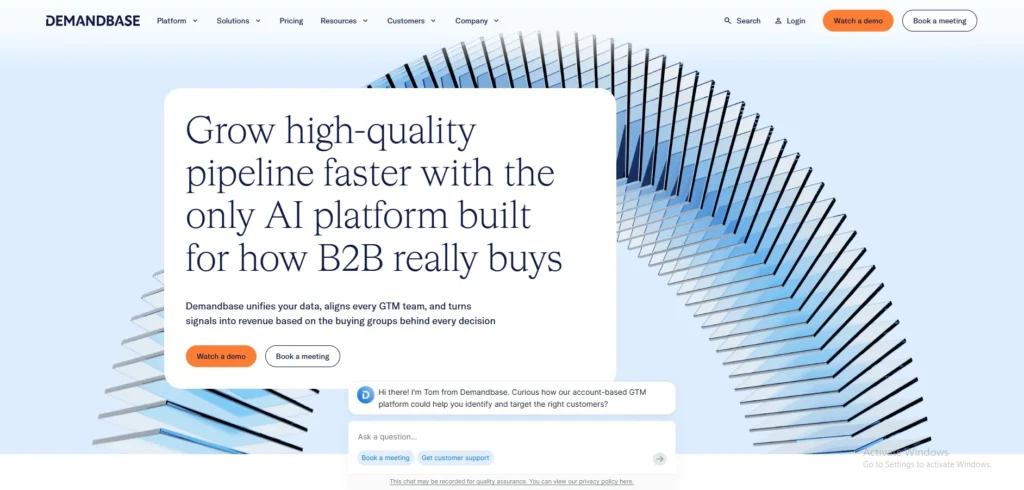
Demandbase is a B2B market intelligence and account-based marketing platform that helps organizations identify high-value prospects and analyze target markets. The platform combines firmographic data, intent signals, and predictive analytics to reveal which companies are actively researching specific products or services.
Sales and marketing teams use Demandbase to prioritize leads, personalize campaigns, and understand buyer behavior. The software also provides dashboards for tracking account engagement and market trends.
By integrating marketing and sales data, Demandbase helps organizations align their strategies with real market demand. This intelligence enables businesses to improve targeting accuracy and accelerate revenue growth in competitive B2B environments.
Key Features:
- Account-based marketing intelligence tools
- B2B intent data analytics
- Predictive lead scoring models
- Firmographic and technographic data insights
- Marketing and sales alignment dashboards
- Target account engagement tracking
Pros:
- Excellent for B2B marketing strategies
- Strong predictive analytics capabilities
- Improves targeting accuracy significantly
- Integrates well with CRM systems
- Helps identify high-value prospects
Cons:
- Primarily designed for B2B companies
- Implementation requires technical resources
- High cost for small businesses
Pricing:
- Contact sales
11. ZoomInfo
Website: https://www.zoominfo.com/
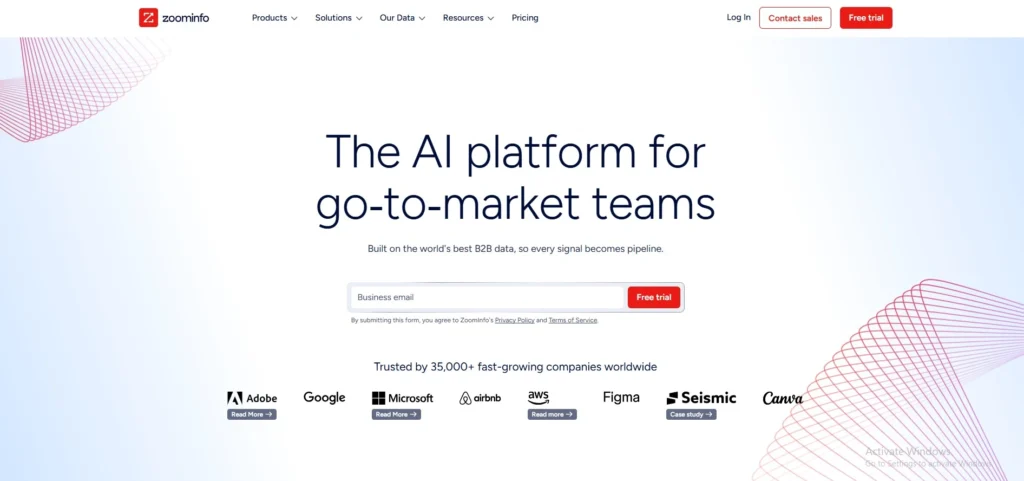
ZoomInfo is a B2B market intelligence platform that provides detailed databases of companies, decision makers, and industry contacts. The platform collects and organizes business information from multiple data sources, enabling organizations to identify potential customers and analyze market segments.
Sales and marketing teams use ZoomInfo to generate leads, evaluate competitors, and understand buying intent signals. The software also integrates with CRM systems to streamline prospect management and outreach campaigns.
By combining contact data with analytics and automation tools, ZoomInfo enables businesses to conduct targeted market research and improve sales efficiency. Its extensive data coverage makes it valuable for companies pursuing data-driven growth strategies.
Key Features:
- Large B2B contact database
- Company and decision-maker insights
- Buyer intent signal tracking
- CRM and sales platform integrations
- Automated lead generation tools
- Market segmentation analytics
Pros:
- Extensive global business contact database
- Powerful lead generation capabilities
- Accurate firmographic and technographic data
- Enhances B2B sales prospecting efficiency
- Strong integration with marketing tools
Cons:
- Expensive subscription plans available
- Data accuracy varies occasionally
- Best suited for sales-focused teams
Pricing:
- Contact sales
12. Owler
Website: https://www.owler.com/corp
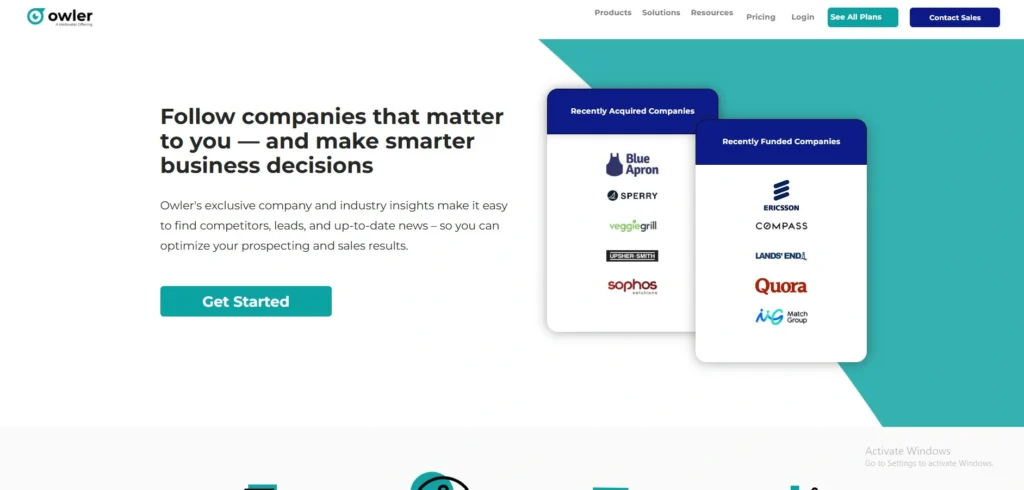
Owler is a business intelligence and competitive monitoring platform that provides insights into companies, industries, and market developments. The platform aggregates company profiles, funding announcements, acquisitions, and revenue estimates to help users track competitor activity.
Businesses rely on Owler to monitor industry trends, identify emerging competitors, and stay informed about strategic moves in their markets. Its dashboards present data in a simple format that enables quick analysis of competitor performance.
Owler also uses crowdsourced insights and data contributions from professionals to enhance its company profiles. This approach provides users with up-to-date intelligence that supports competitive analysis and strategic planning.
Key Features:
- Competitor company profile tracking
- Industry news and funding alerts
- Revenue estimates and company insights
- Competitive benchmarking dashboards
- Crowdsourced business intelligence data
- Market trend monitoring tools
Pros:
- Easy competitor monitoring interface
- Provides regular industry updates
- Helpful for quick competitive research
- Free version available for basic use
- Simple dashboards for quick insights
Cons:
- Limited advanced analytics features
- Crowdsourced data may vary accuracy
- Enterprise features require subscription
Pricing:
- Pro- $468 per month Billed annually
- Pro- $468 per month Billed annually
13. Ahrefs
Website: https://ahrefs.com/
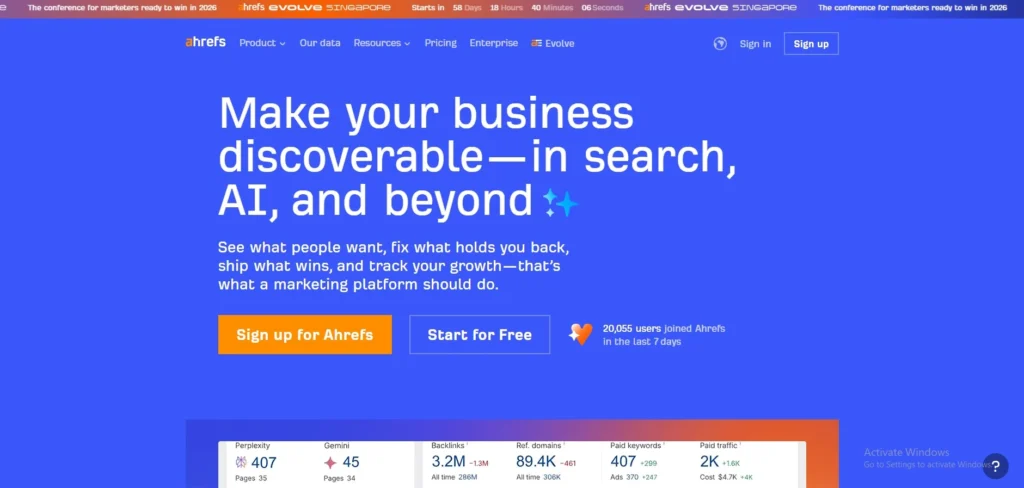
Ahrefs is a widely used SEO and digital market intelligence platform that helps businesses analyze website performance and competitor strategies. The software provides detailed insights into backlinks, keyword rankings, organic traffic, and content performance.
Marketers use Ahrefs to identify profitable search opportunities, monitor competitors’ SEO strategies, and improve website visibility. Its large web crawler database enables accurate analysis of link profiles and search trends across millions of websites.
The platform also offers site auditing tools that highlight technical SEO issues affecting performance. By combining competitive research with advanced analytics, Ahrefs enables businesses to strengthen their digital marketing strategies and outperform competitors online.
Key Features:
- Massive backlink analysis database
- Organic keyword ranking research
- Competitor content gap analysis
- Website SEO audit tools
- Rank tracking and performance monitoring
- Content Explorer Market Research
Pros:
- Industry-leading backlink data index
- Accurate competitor SEO insights
- Excellent tools for content strategy
- Simple and powerful user interface
- Reliable keyword research capabilities
Cons:
- No free plan available
- Expensive for beginners or startups
- Primarily focused on SEO analytics
Pricing:
- Lite- $129 /mo
- Standard- $249 /mo
- Advanced- $449 /mo
14. AppTweak
Website: https://www.apptweak.com/en
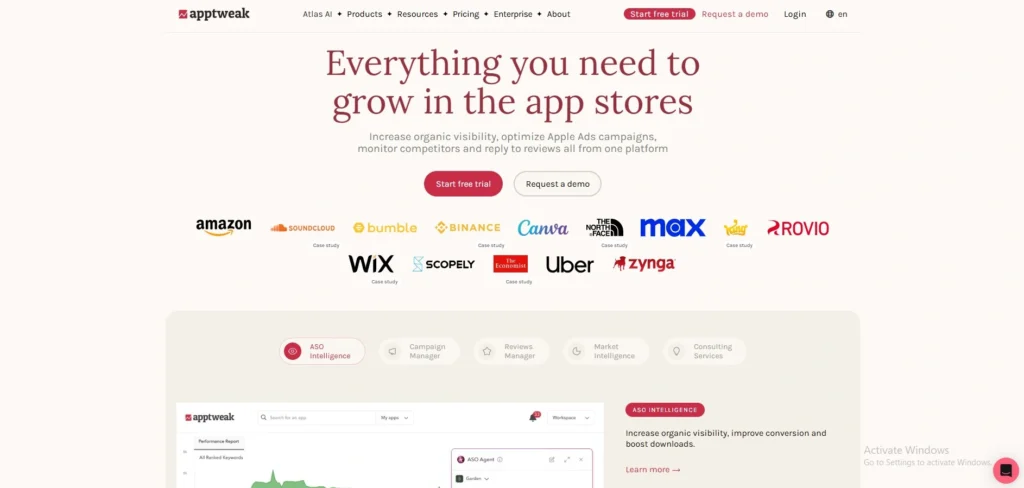
AppTweak is a market intelligence platform designed for mobile app developers and marketers. The software provides insights into app store rankings, keyword performance, and competitor app strategies.
Businesses use AppTweak to optimize app store listings, track user acquisition trends, and analyze market demand within mobile ecosystems. The platform’s analytics tools allow companies to monitor competitor apps and identify opportunities to improve visibility and downloads.
Developers also receive data-driven recommendations for improving app descriptions, keywords, and advertising strategies with the help of Market Intelligence Software. By providing deep insights into app store performance and competitive positioning, AppTweak helps organizations succeed in the highly competitive mobile application market.
Key Features:
- App Store keyword optimization tools
- Competitor mobile app analysis
- App ranking and visibility tracking
- Mobile market trend analytics
- App performance monitoring dashboards
- Advertising campaign optimization insights
Pros:
- Specialized tool for app marketing
- Strong app store optimization analytics
- Useful competitor insights for developers
- Accurate mobile app ranking data
- Helpful keyword recommendation features
Cons:
- Limited to mobile app markets
- Smaller dataset than general platforms
- Premium plans required for full access
Pricing:
- Essential- $99/ Mo
- Grow- $299/ Mo
15. Adthena
Website: https://www.adthena.com/
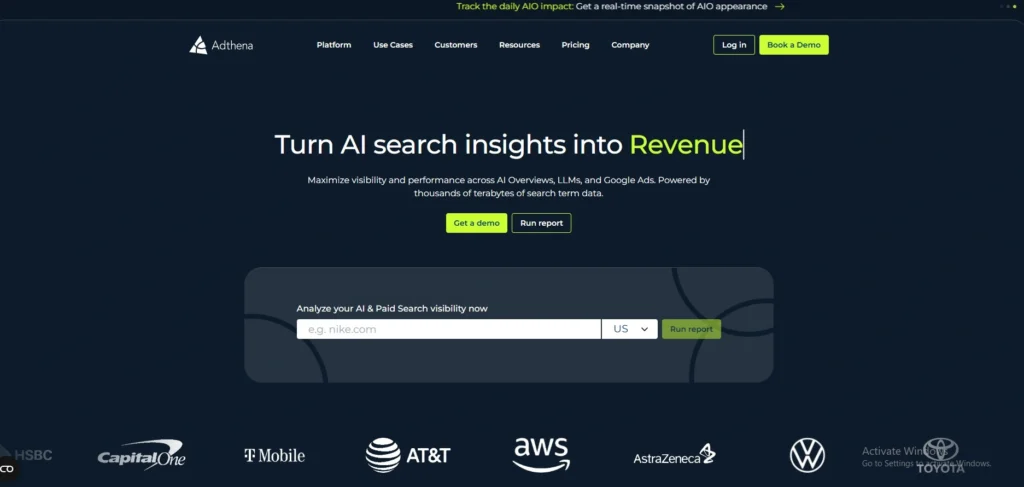
Adthena is a search intelligence and market analysis platform focused on paid search advertising. The software analyzes billions of search engine data points to reveal competitor advertising strategies, keyword bidding patterns, and market share trends.
Businesses use Adthena to optimize pay-per-click campaigns and identify opportunities to outperform competitors in search results. Its AI-powered analytics help marketers understand how competitors structure campaigns and allocate advertising budgets.
The platform also provides insights into emerging keyword opportunities and consumer demand patterns. By transforming complex search data into actionable intelligence, Adthena enables organizations to improve advertising performance and make strategic marketing decisions.
Key Features:
- Paid search competitor intelligence
- Keyword bidding strategy insights
- Market share analysis for PPC
- AI-driven search campaign analytics
- Competitive advertising monitoring tools
- Search demand trend forecasting
Pros:
- Powerful paid search intelligence insights
- Helps optimize PPC advertising strategies
- Reveals competitor bidding behaviors
- Strong analytics for search marketers
- Useful for large advertising campaigns
Cons:
- Focused mainly on paid search data
- Pricing suited for enterprise teams
- Limited functionality beyond advertising
Pricing:
- Custom Pricing
Also read: AI Tools For Marketing
Ending Thoughts
Market intelligence software has become an essential resource for businesses seeking to remain competitive in increasingly complex and data-driven markets. These platforms help organizations collect, analyze, and interpret large volumes of information related to competitors, customers, and industry trends. By transforming scattered data into actionable insights, companies can make smarter strategic decisions, identify emerging opportunities, and respond quickly to market changes.
From digital analytics tools to advanced AI-driven intelligence platforms, the right solution can significantly improve marketing effectiveness, product development, and long-term planning. However, selecting suitable software requires careful evaluation of features, data accuracy, integration capabilities, and pricing. When implemented effectively, market intelligence tools empower businesses to anticipate trends, minimize risks, and achieve sustainable growth in competitive global environments.
FAQs
1. What Is Market Intelligence Software?
Market intelligence software helps businesses collect, analyze, and interpret data about competitors, customers, and industry trends to support strategic decision-making.
2. Who Should Use Market Intelligence Tools?
Marketing teams, business analysts, product managers, and executives use these tools to understand market dynamics and competitor strategies.
3. How Do Market Intelligence Tools Collect Data?
They gather data from sources such as websites, social media, industry reports, financial filings, and customer behavior analytics.
4. Can Small Businesses Benefit From Market Intelligence Software?
Yes, small businesses can use these tools to monitor competitors, identify trends, and make informed marketing and growth decisions.
5. Are Market Intelligence Tools Expensive?
Pricing varies widely, with options ranging from affordable subscriptions for small teams to advanced enterprise platforms with premium features.