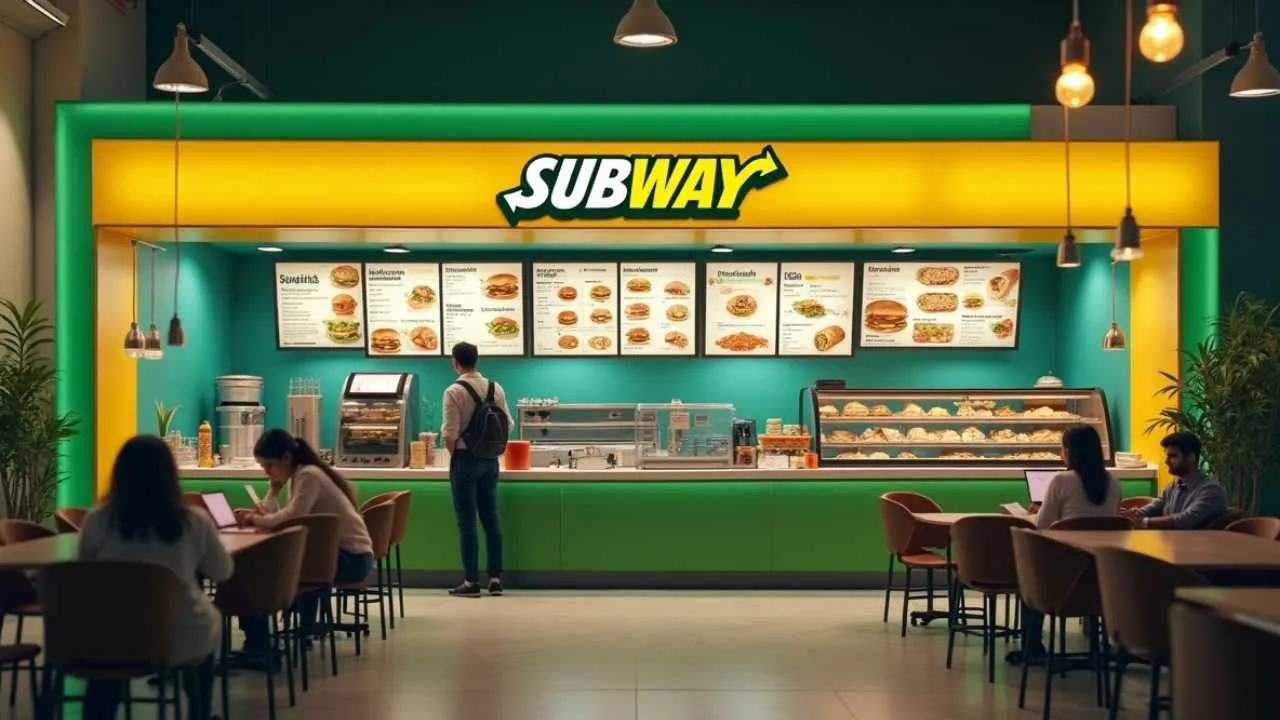
Thinking about starting a food business in India, but don’t want to build a brand from scratch? A Subway franchise in India could be the opportunity you’ve been looking for.
With India’s rapidly growing urban population and increasing demand for quick yet healthier food options, Subway has carved out a strong space in the fast-food market. Known globally for its customizable sandwiches and fresh ingredients, Subway appeals to health-conscious consumers who want convenience without compromising on quality. That makes it a powerful brand to partner with.
For aspiring entrepreneurs, investing in a Subway franchise means stepping into a proven business model backed by global recognition, structured training, and operational support. Instead of experimenting with an untested concept, you get a ready-made system designed for scalability and long-term growth.
But how much does it actually Subway Franchise Cost in India? What are the profit margins? How long does it take to recover your investment? And is it the right franchise choice compared to other food brands?
In this detailed 2026 guide, we’ll break down the total investment, profit potential, ROI timeline, franchise fees, and the step-by-step application process — so you can decide with clarity and confidence.
Subway in India: History and Overview
Subway was founded in 1965 by Fred DeLuca and Dr. Peter Buck in the United States. What started as a small sandwich shop quickly expanded into one of the world’s largest fast-food chains. With its focus on freshly made, customizable sandwiches and a “healthy fast food” positioning, Subway built a strong global presence across more than 100 countries.
Entry of Subway into India
Subway entered the Indian market in 2001, bringing its globally successful sandwich concept to Indian consumers. At a time when burgers and fried chicken dominated the fast-food market, Subway introduced a fresh and customizable alternative.
The brand positioned itself as a healthier quick-service restaurant (QSR), offering freshly baked bread, customizable fillings, salads, and low-fat options.
Current Market Position (2026)
Today, Subway is recognized as one of the leading international sandwich brands in India. While competition in the QSR sector has intensified with the presence of brands like KFC, McDonald’s, and local chains, Subway continues to hold a strong position in the healthy fast-food segment.
What Is a Subway Franchise?
A franchise refers to a payment of a company to utilize their brand name and business system. You run the store. The brand, training and support are offered by the company. Subway works the same way. You pay Subway. You open a store. You sell their food. You retain the profit after paying royalty amounts. This model is trendy since you are not beginning at the bottom. You receive a brand that is already trusted by the people.
As of 2026, Subway in India operates as one of the most structured and scalable franchise-driven QSR (Quick Service Restaurant) brands in the country. While exact numbers fluctuate due to store openings and closures, industry estimates place Subway at 700–800+ outlets across India, making it one of the largest sandwich chains in the country.
Who Manages Subway Franchise in India?
Subway in India has local franchisees. It does not have a universal master franchisee in all of India. Rather, personal business owners supply and operate their own Subway franchises.
Subway has a regional development team in India that operates their operations in India. They do approvals, training and support of all the Indian outlets.
Subway Outlets in India
Subway is projected to have about 700 to 800 stores in India by 2026. This figure keeps on increasing by the year. Subway has over 40 outlets in India. Major cities include:
- Mumbai
- Delhi NCR
- Bangalore
- Hyderabad
- Pune
- Chennai
- Kolkata
- Ahmedabad
- Chandigarh
- Jaipur
Why Invest in a Subway Franchise?
The idea of franchising at Subway is famous due to its high rate of return on investment. The increase in the market demand for healthy fast food makes subs very appealing to the consumers of India making it ideal for franchisees. There are several reasons why investing in a Subway franchise is a smart business decision:
1. Branding and Recognition
Subway is one of the largest fast food outlets around the globe and operates in over one hundred countries. Its brand image and positioning strategy represent a healthy, hi-tech and modern eating facility where customers can eat foods that are freshly prepared and quickly served. In India, the brand has experienced consumer awareness to grow rapidly as more and more people switch to healthier and personalized meals. First, as a franchisee, you get to utilize the brand’s recognition to get customers long before the store is even set up.
2. Low Initial Investment
Compared to other fast food chain franchises around the world, Subway’s entry cost is relatively small. The total investment that is required to open a Subway franchise in India is between ₹10 lakhs and ₹20 lakhs based on the size of the store and location of the store. This lower financial risk also makes Subway uniquely appealing to anyone enterprising enough to consider opening their restaurant but who cannot afford the heavy investment needed to bring a large chain restaurant brand to a location.
3. Proven Business Model
Subway has a franchise system that was developed and has shown potential for success in various countries; however, India itself. The company supports its franchisees with detailed operating instructions and guidance to guarantee that they maintain quality and similar experience and performance. This proven and frequently disclosed business model minimizes the risk inherent in starting up a new business.
4. Health Conscious Mindset
The importance of Subway in a country such as India is that first of all fast foods are always perceived to be unhealthy foods. New awareness on healthy lifestyles and dietary choices is creating a market for Subway’s products, easy to customize low calorie options. Shift in the consumption pattern is one of the major factors which greatly benefited subway in increasing growth opportunities for franchise partners in India.
5. Full Service and Training
Subway provides its franchisees with a wide range of services, including training, marketing, and business consultation. Thus, as a franchisee,e you will acquire all the tools, resources, and knowledge you need to manage your business. This extensive support enables franchisees to thrive by eliminating most problems associated with food kiosk operations.
6. Scalability and Flexibility
The franchise structure of operations means that Subway can grow to additional levels. Once one outlet is successfully established, the company could expand, either in the same shopping area or in a different part of the city. In the same way, the operating modes of Subway stores include traditional restaurants, kiosks, and mobile food carts, which vary depending on the target audience and the area.
Location, commitment and operations discipline, Subway franchise business can be a very good opportunity for success and profitability. It has got a very powerful brand name and concept coupled with low investment and support, thus falling under the right business model.
Subway Franchise Cost in India – 2026 Breakdown
Let’s talk numbers. This is the most significant part. Subway franchise fee in India will be between 45 lakhs and 70 lakhs. This is as much as franchise fee, store set up, equipment and inventory. Here’s a detailed breakdown:
1. Franchise Fee
It is a single advancement transaction with Subway. It is between 10-15 lakh Indian rupees. You in turn have the privilege of using the Subway brandname. Their team also trains and provides early assistance.
2. Security Deposit
In India, a security deposit is demanded by most landlords. This amounts to an average of 5 -10 lakhs. The price varies according to your place of residence.
3. Store Setup and Interior
Subway has a lot of guidelines as to the appearance of the store. The interior should be in accordance with their design. This is approximately ₹15 lakhs and 25 lakhs. It includes flooring, lighting, furnishing, and walls.
4. Kitchen Equipment
You require refrigerators, sandwich preparation tables and ovens among others. This costs ₹10 lakhs to ₹15 lakhs. Subway assists you with the purchase of the appropriate equipment by the certified suppliers.
5. Initial Inventory
You must have to stock up before you open. Bread, meat, vegetables, sauces, packs – all this will cost ₹3 lakhs -5 lakhs initially.
6. Ongoing Royalty Fees
You give Subway royalty fees of 8 percent of all your monthly sales. You are also paying 4% monthly sales to their advertising fund. That is why 12 percent of your earnings are returned to Subway every month.
Subway Franchise Cost in India – Table
| Expense Category | Estimated Cost (₹) |
| Franchise Fee | ₹10 – ₹15 lakhs |
| Security Deposit | ₹5 – ₹10 lakhs |
| Store Setup & Interior | ₹15 – ₹25 lakhs |
| Kitchen Equipment | ₹10 – ₹15 lakhs |
| Initial Inventory (Stock) | ₹3 – ₹5 lakhs |
| Signage & Branding | ₹1 – ₹2 lakhs |
| Miscellaneous Expenses | ₹1 – ₹3 lakhs |
| Total Investment | ₹45 – ₹70 lakhs |
Subway Franchise Cost Variation by City
The cost to open a Subway is not the same everywhere in India.
| City | Monthly Rent (Approx.) | Total Setup Cost (Approx.) |
| Mumbai | ₹1.5 – ₹5 lakhs/month | ₹60 – ₹75 lakhs |
| Delhi | ₹1 – ₹4 lakhs/month | ₹55 – ₹70 lakhs |
| Bangalore | ₹80,000 – ₹3 lakhs/month | ₹50 – ₹65 lakhs |
| Hyderabad | ₹60,000 – ₹2 lakhs/month | ₹48 – ₹62 lakhs |
| Pune | ₹50,000 – ₹1.5 lakhs/month | ₹45 – ₹60 lakhs |
| Tier-2 Cities | ₹30,000 – ₹80,000/month | ₹40 – ₹55 lakhs |
Subway Franchise Profit Margin in India
Now the big question is how much money can you make?
In India, Subway franchisees earn 15% to 22% per month in sales. This is once all costs such as renting, royalty, salaries and supplies are paid.
The math of this would be as follows:
An outlet of Subway on a good location generates revenue of 10 lakh to 15 lakhs every month.
The profit after all expenses is approximately 1.5 to 3.3 lakhs per month. That’s a solid income. Particularly when the business has a brand that is known.
The profit margins are bigger when:
- It is a busy area (malls, offices, college areas).
- Your store is well-managed
- You manage costs of waste and staff.
- Subway Franchise Monthly revenue estimates.
| Store Location | Monthly Revenue | Profit Margin | Monthly Profit |
| Metro City (High Traffic) | ₹15 lakhs | 18–22% | ₹2.7 – ₹3.3 lakhs |
| Metro City (Moderate Traffic) | ₹10 lakhs | 15–18% | ₹1.5 – ₹1.8 lakhs |
| Tier-2 City | ₹6 – ₹8 lakhs | 15–20% | ₹90,000 – ₹1.6 lakhs |
| College/Office Area | ₹8 – ₹12 lakhs | 16–20% | ₹1.28 – ₹2.4 lakhs |
Return on Investment (ROI)
The majority of Subway franchisees pay back in a period of 1.5 -2.5 years. That is quicker than a majority of food companies. Some of the owners make a break-even point within 18 months with good operations and a strong location.
Assistance from Subway Franchise To Indian Franchisee
One of the most important advantages of the Subway system is the increased level of support provided to a franchisee. This support extends to the pre-establishment and establishment stages of the business as well as the day-to-day operations and marketing.
1. Training Programs
Training of the franchisee and their staff is carried out diligently by Subway. This training entails all the areas of managing the business, such as preparing the Sandwich, stock control, customer relations, and undertaking store operations. Unit franchisees are sensitive to Subway’s standards and the procedural way of doing things after being trained both online and physically.
2. Ongoing Operational Support
Subway also offers constant support in aspects concerning the supply chain as well as the running of stores, and dealing with constrained organizational purchase groups provides franchisees with a support team for inventory control and problem-solving for technical glitches.
3. Marketing and Advertising
Even in its advertising and other promotional activities, subway’s marketing department coordinates with franchisees for the outlets.Direct promotions and national advertisement coupled with local marketing techniques assist in creating traffic to Subway stores. The nature of franchising also means franchisees will make an input towards a national marketing fund which will guarantee marketing consistency.
4. Product Development
New products are always appearing in Subway and there are always new options changing in Subway as well. Companies pass these updates to franchisees because they assist the latter in adjusting to new conditions and demands.
5. Franchisee Network
Subway has a good chain of franchises, which allows the owners of shops to compare their experience and results. He can listen to the success stories of other Subway owners during conferences and meetings.
Strong support is also one of the primary factors that positively impacted Subway and it also greatly contributes to the profitability of its franchisees.
How to Apply for a Subway Franchise in India
Ready to apply? This is just a general stepwise instruction.
Step 1: Do Your Research
Get to know the business beforehand. Research the prices, the city you are in, and ask yourself whether you had the money. Come out clean on your budget and experience.
Step 2: Access the official Subway Web Page.
Visit subway.com and browse through the franchise part. Their franchise team in India is also reachable.
Step 3: Submit an Application
Complete the franchise application form online. You’ll need to provide:
- Contact information and full name.
- Business experience (if any)
- Financial background
- Preferred city and location
The reason why you would like to start a Subway franchise.
Step 4: Initial Screening
Subway will look through your application. They determine your solvency, background and aptitude. Documents may be requested by them at this stage.
Step 5: Site Selection
In case they are accepted, their crew will assist you in locating the proper place. They consider pedestrian traffic, local competition and accessibility. Location is the key to success.
Step 6: Sign the Franchise Agreement.
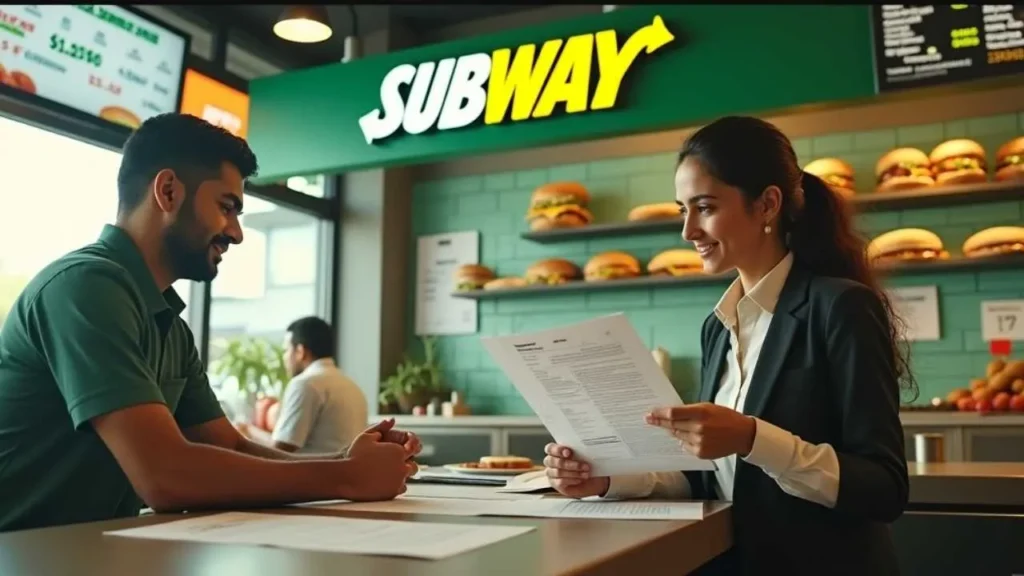
After a location has been decided upon, you enter into a legal contract with Subway. In this document, franchise fee, terms on royalty, and your rights and responsibilities are discussed.
Step 7: Store Set up and Training.
The team of Subway assists you to establish the store in their set standards. You and your employees receive complete training. When all is in readiness you open your store!
Using these guidelines, therefore, anyone with aspirations of owning a Subway franchise should be able to secure this business venture and start a new company in the fast food business.
Challenges to consider before buying Subway Franchise
Having a Subway franchise is a very fulfilling business venture to have though it has complications that it comes with. Here are a few you should consider:
1. Competition
The various fast-food joints which operate in India are closely competing with one another; with foreign fast-food chains as well as domestic operators. From the case analysis, it is clear that Subway’s success has to stem from the continued focus on the health angle as its USP, and avoiding convergence with other fast food brands.
2. Initial Investment
While the investment when starting Subway is relatively lower than most fast-food franchises, it still needs a lot of capital. Rent, franchise fees, cost of equipment and other inventory to be purchased also matter. Further, especially for retailers, having facilities in strategic places may lead to high costs of rent and establishment.
3. Location Sensitivity
Seasoned investors will agree that the location of an outlet determines the extent of business Subway outlets are not an exception. Setting the store in an area of little traffic or an uninhabited area will produce less traffic and therefore fewer chances to sell the products that you are selling; this makes it very important to ensure that the store is set in a busy area to get much traffic.
4. Operational Challenges
It entails operating, organizing and supervising several employees for a commercially successful fast food chain such as Subway. The franchisees are to guarantee quality food products, cleanliness and excellent customer satisfaction levels. These operational demands can be however difficult, particularly for first-time business fulfillers.
5. Supply Chain and Inventory
The ingredients used in Subway’s products have to be fresh at all times as this is one of its core competencies. It means that supply delivery, an inconsistent supply or even stock-outs can hamper the capacity to serve the customer at the store. Most of the franchises have preferred this type of operation since they require adequate control of stock and reduced wastage.
Comparison — Subway vs KFC vs Starbucks Franchise in India
Thinking about which franchise to pick? Here’s a quick comparison:
| Brand | Total Investment | Franchise Fee | Profit Margin | ROI Period |
| Subway | ₹45 – ₹70 lakhs | ₹10 – ₹15 lakhs | 15 – 22% | 1.5 – 2.5 years |
| KFC | ₹1.5 – ₹2.5 crores | ₹36 lakhs | 8 – 14% | 3 – 5 years |
| Starbucks | ₹1.5 – ₹3 crores | Not disclosed | 10 – 15% | 3 – 5 years |
Conclusion
Thus, purchasing Subway would be a fairly good investment for those wanting to enter the fast-food market of India. Combining globalization which already signifies its name globally, makes Subway the most preferred eatery that provides healthy and flexible meals. The cost of starting this business is relatively low as compared to the other international fast foods and it should entice any would-be entrepreneur.
Furthermore, Subway offers detailed support to its franchise partners which entails training, marketing support as well as operational support at all times to enable them to prepare for success. Yet the crucial aspect of location is still paramount, and these specifics have to be discussed regarding the characteristics of the flow of people and competition. Of course, this can be achieved where the franchisees concern themselves with following the tested business model of Subway alongside benefiting from its strong support structures.
Owning a Subway franchise is possible in India provided one is willing to dedicate his/her time and resources to the business and venture In the long run, it is a profitable business venture.
FAQs
What is the Subway Franchise Fee in India?
Franchise fees and stores range between ₹ 10 lakhs and ₹ 15 lakhs, followed by inventory and equipment.
How much does a franchisee pay for royalty to Subway?
Monthly rent costs are 8% of sales and 4% goes into a national advertising fund.
Which type of training does Subway offer?
Training available at Subway includes all the aspects of store operations including serving of sandwiches, communication with customers and restocking.
How much time does it take for a Subway franchisee to make a break even?
Average payback period in franchising can last from two to three years though it largely depends on the province of site and its sales result.
Where can one get the Subway franchise?
You can apply online via Subway’s website or reach the franchise development department via phone call or post. The process of application comprises site selection and a franchise agreement.