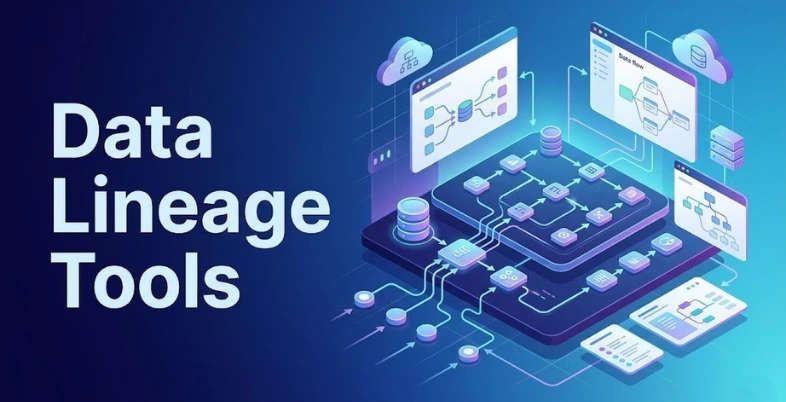
As organizations increasingly rely on data for decision-making, understanding how that data flows and transforms across systems becomes critical. With multiple data sources, pipelines, and analytics platforms in place, tracking the complete journey of data can quickly become complex. This is where the best data lineage tools prove invaluable.
Data lineage tools provide a clear and visual representation of data movement, from its origin to its final use in reports or dashboards. They help teams identify dependencies, detect errors, and ensure consistency across the data ecosystem. By offering deeper visibility, these tools make it easier to maintain high data quality and reliability.
In addition, leading data lineage tools support data governance by creating detailed audit trails and helping organizations meet compliance requirements. They also enable impact analysis, allowing teams to understand how changes affect downstream systems. Overall, these tools bring clarity, control, and confidence to modern data operations.
What are Data Lineage Tools
Data lineage tools are software solutions that help organizations track, visualize, and understand the flow of data across systems, from its origin to its final destination. They provide a complete view of how data is collected, transformed, and used throughout its lifecycle.
In simple terms, data lineage software act like a “map” for your data. They show where the data comes from (such as databases or applications), how it changes through various processes (like cleaning, aggregation, or transformation), and where it is ultimately used (such as dashboards, reports, or analytics tools).
These tools are essential for businesses dealing with complex data environments because they improve transparency and make it easier to identify errors or inconsistencies. If something goes wrong—like incorrect data in a report—a data lineage platform helps teams quickly trace the issue back to its source.
Additionally, data lineage tools support data governance and compliance by maintaining detailed records of data movement. This ensures organizations can meet regulatory requirements and build trust in their data for better decision-making.
Key Features To Look For In Data Lineage Platform
- Automated Lineage Tracking: The tool must have the ability to record data flow between sources, transformations, and destinations automatically without the need to document the information manually.
- Visual Lineage Diagrams: Visual diagrams are easy to use: users can easily understand dependencies and data flow across systems and lines of pipelines.
- Metadata Management: Good lineage tools are used to collect and organize metadata in a way that is easily discovered and understood by teams of data assets.
- Impact Analysis: This feature allows teams to easily determine which reports, dashboards, or datasets will change when a change happens in a data source.
- Connections to Data Platforms: A robust lineage tool must be connected to databases, ETL tools, data warehouses, and BI platforms with ease.
Benefits Of Using Data Lineage Software
- Better Data Transparency: Teams are in a better position to know the origin of data and its transformation along the pipeline.
- Quick Troubleshooting: Lineage tools today allow rapid tracing of a root cause when there are errors in reports or dashboards.
- More Control of Data Usage: Organizations can have greater control over how the data is used and also make sure that it is within regulatory standards.
- Increased Data Quality: The interpretation of data transformations assists the teams in identifying inconsistencies and ensuring the reliability of datasets.
- Stronger Cooperation: Data engineers, analytics, and business workgroups will be able to collaborate better with mutual data flow visibility.
List Of 15 Best Data Lineage Tools
1. Apache Atlas
Website:https://atlas.apache.org/
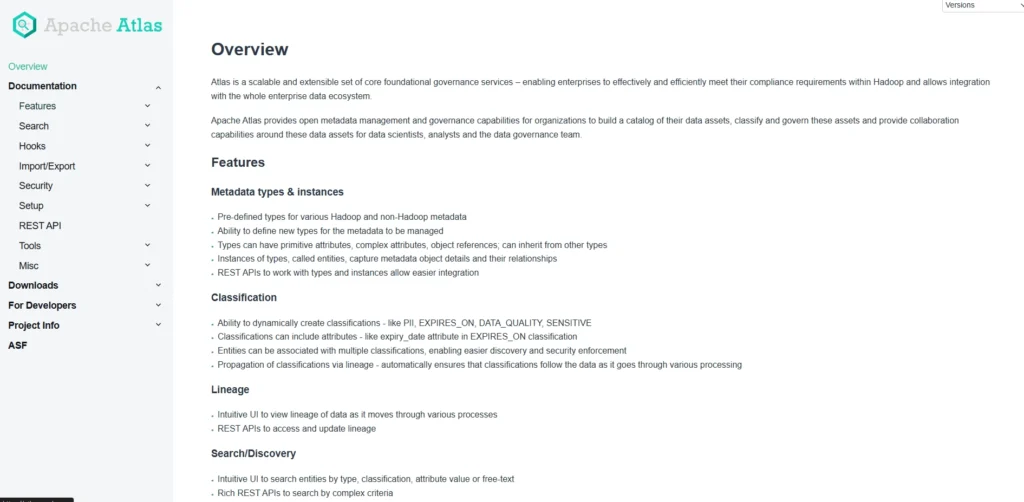
Apache Atlas is an open-source data governance and metadata management platform designed to help organizations understand the flow of data across their systems. It provides powerful data lineage capabilities that allow teams to trace how data moves through different pipelines, transformations, and storage systems. This makes it easier to monitor data quality, ensure compliance, and maintain transparency across data environments.
Atlas integrates well with many big data platforms such as Hadoop, Hive, and Spark, making it especially useful for organizations working with large-scale data ecosystems. With its strong governance features, Apache Atlas helps data engineers and analysts understand dependencies between datasets and quickly identify the root cause of data issues.
Top Features
- Automated data lineage tracking across data pipelines
- Metadata management and data classification
- Integration with Hadoop ecosystem tools
- Data governance and policy enforcement
- Impact analysis for datasets and processes
Pros
- Open-source and free to use
- Strong integration with Hadoop ecosystem (Hive, Spark)
- Powerful data lineage and governance features
- Helps in impact analysis and root cause detection
- Scalable for large data environments
Cons
- Complex setup and configuration
- Requires technical expertise to manage
- Limited UI compared to modern tools
- Not ideal for small or non-technical teams
Pricing:
- Free
2. Collibra Data Intelligence Cloud
Website:https://www.collibra.com/
Collibra Data Intelligence Cloud is a popular enterprise data governance platform that offers powerful data lineage capabilities. It helps organizations understand how data flows across different systems, applications, and business processes. By visualizing data lineage, Collibra enables teams to identify dependencies, ensure data accuracy, and improve trust in their data assets.
The platform is widely used by large enterprises that need strong governance, compliance, and collaboration features. Collibra provides interactive lineage diagrams that help both technical and non-technical users understand how data is created, transformed, and consumed throughout the organization, making it one of the leading data lineage tools.
Top Features
- End-to-end data lineage visualization
- Enterprise data governance framework
- Data catalog and metadata management
- Impact analysis and compliance support
- Integration with cloud and on-premise data systems
Pros
- Strong enterprise-grade data governance features
- Advanced data lineage visualization
- User-friendly interface for both technical and non-technical users
- Excellent collaboration and data stewardship tools
- Supports compliance and regulatory requirements
Cons
- Expensive compared to other tools
- Complex implementation for beginners
- Requires training to fully utilize features
- May be overkill for small businesses
Pricing:
- Available on request
3. Informatica Enterprise Data Catalog
Website:https://www.informatica.com/
Informatica Enterprise Data Catalog is a powerful metadata management and data lineage solution designed for modern data environments. It helps organizations automatically scan and catalog their data assets while also providing detailed lineage tracking. This allows data teams to see how data flows from source systems through transformations to final reporting or analytics tools.
The platform uses AI and machine learning to automatically discover relationships between datasets and generate lineage diagrams. This automation significantly reduces the manual effort required to document data pipelines and helps organizations maintain better data governance and regulatory compliance.
Top Features
- Automated metadata discovery and cataloging
- End-to-end data lineage visualization
- AI-powered relationship detection
- Data impact analysis and governance tools
- Integration with multiple enterprise data sources
Pros
- Automated metadata discovery using AI/ML
- End-to-end data lineage visualization
- Reduces manual effort in documenting data pipelines
- Helps maintain compliance and governance
- Integration with multiple enterprise data sources
Cons
- High cost for licensing and implementation
- Requires technical expertise to set up and manage
- Can be complex for smaller teams or simpler environments
- Learning curve for new users
Pricing:
- Available on request
Suggested Read:
4. Microsoft Purview
Website: https://www.microsoft.com/en-in
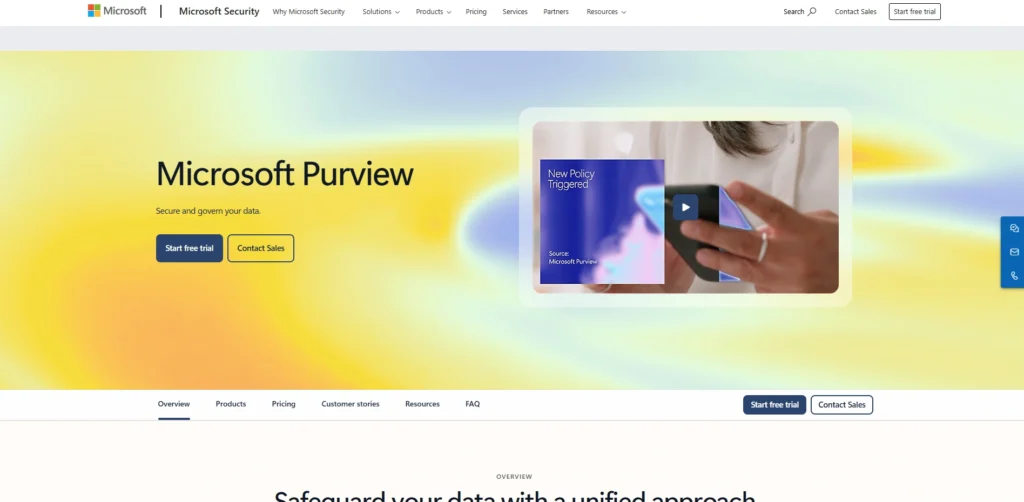
Microsoft Purview is a comprehensive data governance and data lineage platform designed for organizations using cloud and hybrid environments. It provides deep visibility into how data moves across services such as Azure, Power BI, SQL databases, and other enterprise platforms. This helps organizations maintain transparency and accountability in their data processes.
One of the key strengths of Microsoft Purview is its ability to automatically capture lineage information across Microsoft data services. It provides interactive lineage diagrams that help users understand data transformations and dependencies, making it easier to perform impact analysis and ensure compliance with regulatory standards.
Top Features
- Automated lineage tracking across Azure services
- Unified data governance and catalog platform
- Data classification and sensitivity labeling
- Integration with Power BI and the Microsoft ecosystem
- Compliance and risk management tools
Pros
- Strong integration with Microsoft ecosystem (Azure, Power BI, SQL)
- Automated lineage tracking across services
- Interactive lineage diagrams for easy visualization
- Helps with compliance and regulatory standards
- Cloud and hybrid environment support
Cons
- Best suited for Microsoft-centric environments (less optimal for others)
- Pricing can be high for smaller organizations
- Learning curve for advanced features
- Limited flexibility outside Microsoft tools
Pricing:
- $10.80/month
5. Alation Data Catalog
Website:https://www.alation.com/
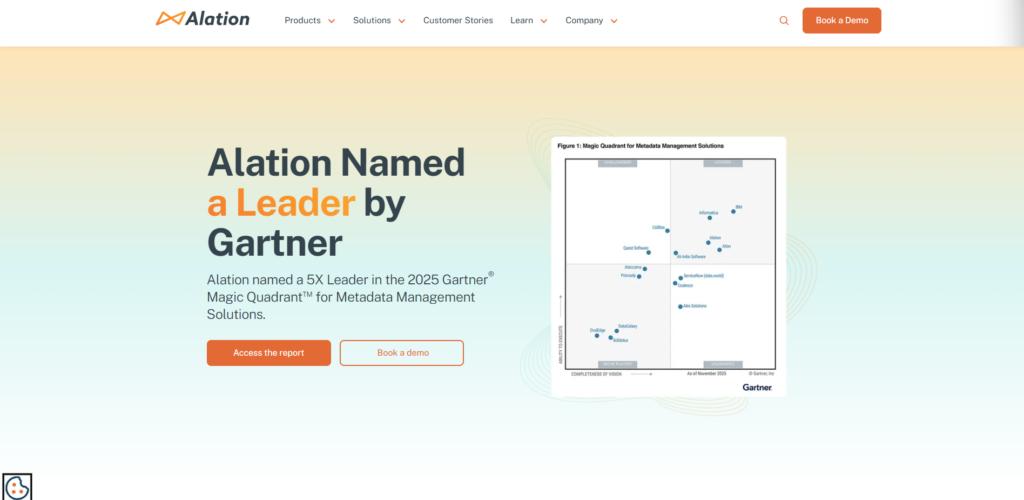
Alation Data Catalog is a widely used data intelligence platform that includes strong data lineage tools and data lineage capabilities. It allows organizations to track how data flows from source systems to analytics dashboards, helping teams better understand their data pipelines and dependencies. The platform also improves collaboration by enabling data professionals to share insights about datasets.
Alation focuses on making data governance accessible to both technical and business users. Its lineage visualization features provide clear diagrams showing how data is transformed and used across the organization. This transparency helps teams maintain data quality, reduce errors, and build trust in analytics results.
Top Features
- Visual data lineage tracking
- Enterprise data catalog and metadata management
- Data governance and stewardship tools
- Search and discovery for datasets
- Collaboration features for data teams
Pros
- User-friendly interface for technical and business users
- Strong data lineage visualization
- Supports collaboration across data teams
- Helps improve data quality and reduce errors
- Facilitates better understanding of data pipelines
Cons
- Licensing costs can be high for smaller organizations
- Limited advanced features compared to some enterprise-grade tools
- Implementation may require professional support
- Can be overwhelming for very large datasets without proper setup
Pricing:
- Available on request
6. IBM InfoSphere Information Governance Catalog
Website:https://www.ibm.com/products/information-governance-catalog
IBM InfoSphere Information Governance Catalog is a powerful enterprise solution designed to help organizations understand their data assets and how they move across different systems. It provides detailed data lineage capabilities that allow businesses to trace data from its original source through transformations and into final reporting or analytics platforms.
The platform is commonly used in large enterprises that require strong governance and compliance management. With built-in metadata management and impact analysis features, IBM InfoSphere helps organizations maintain high data quality standards while ensuring transparency in their data workflows.
Top Features
- End-to-end data lineage tracking
- Metadata and data asset management
- Data governance and compliance support
- Data impact and root cause analysis
- Integration with enterprise data platforms
Pros
- Comprehensive data governance and lineage tracking
- Strong metadata management and impact analysis
- Ideal for large, regulated enterprises
- Ensures high data quality and compliance
- Helps identify root causes and dependencies easily
Cons
- Complex setup and configuration
- Expensive licensing and maintenance costs
- Steep learning curve for new users
- May be overkill for smaller organizations
Pricing:
- Available on request
7. Apache Airflow
Website:https://airflow.apache.org/
Apache Airflow is a widely used open-source platform for orchestrating and managing data workflows. While it is primarily known as a workflow automation tool, it also provides strong data lineage capabilities through integrations and metadata tracking. Airflow allows teams to visualize how data pipelines are structured and understand how different tasks and processes depend on each other.
With its flexible architecture and strong community support, Apache Airflow has become a popular choice for modern data engineering teams. By integrating with lineage frameworks and metadata tools, data lineage tools Airflow helps organizations track how data moves through pipelines, making it easier to monitor workflows, debug issues, and maintain reliable data processes.
Top Features
- Workflow orchestration for data pipelines
- Integration with lineage and metadata tools
- Visual pipeline monitoring and scheduling
- Support for Python-based workflow definitions
- Scalable and highly customizable architecture
Pros
- Open-source and free to use
- Flexible architecture and highly customizable
- Strong community support and resources
- Visualizes pipelines and task dependencies
- Can integrate with lineage and metadata tools
Cons
- Requires technical expertise to set up and manage
- Limited built-in UI for non-technical users
- Debugging complex workflows can be challenging
- Not a full-featured data governance tool on its own
Pricing:
- Free
8. Talend Data Fabric
Website:https://www.talend.com/
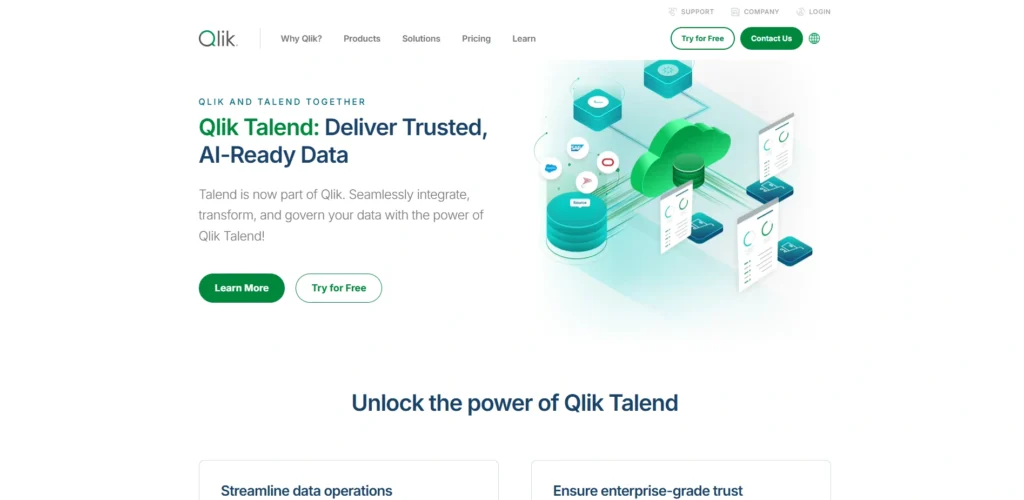
Talend Data Fabric is an integrated platform that combines data integration, data governance, and data quality capabilities. One of its key components is data lineage, which allows organizations to track how data moves across pipelines, transformations, and analytics systems.
Talend helps teams maintain trust in their data by providing clear lineage visibility and metadata management. This makes it easier to understand how datasets are created, modified, and used across different applications. The platform is widely used by companies looking to streamline their data management processes.
Top Features
- End-to-end data lineage visibility
- Integrated data integration and governance tools
- Metadata management and cataloging
- Data quality monitoring and profiling
- Cloud and hybrid deployment support
Pros
- Integrated platform combining data integration, governance, and quality
- Clear data lineage visualization
- Strong metadata management
- Helps maintain trust and reliability in data
- Suitable for complex, hybrid environments
Cons
- Can be expensive for smaller teams
- Requires technical expertise to implement fully
- Learning curve for new users
- Some features may overlap with existing tools
Pricing:
- Available on request
9. OvalEdge
Website:https://www.ovaledge.com/
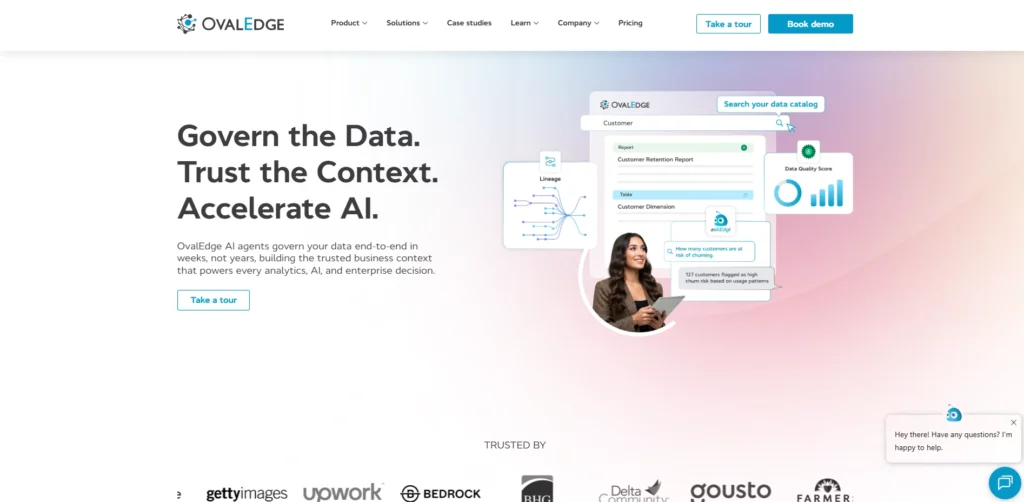
OvalEdge is a modern data governance and data catalog platform that provides strong data lineage tools capabilities. It enables organizations to visualize how data flows across databases, ETL pipelines, and BI tools. This visibility helps teams quickly identify the origin of datasets and understand transformations applied along the way.
The platform is designed to be user-friendly and accessible to both technical and business users. With automated lineage generation and governance workflows, OvalEdge helps organizations improve data transparency, manage compliance, and ensure reliable analytics.
Top Features
- Automated data lineage mapping
- Data catalog and metadata management
- Governance workflows and policy enforcement
- Data quality monitoring tools
- Integration with BI and ETL platforms
Pros
- User-friendly interface for technical and business users
- Automated data lineage mapping
- Visualizes data flow across databases, ETL pipelines, and BI tools
- Improves transparency, compliance, and analytics reliability
- Integrated data catalog and governance features
Cons
- Limited advanced features compared to larger enterprise tools
- Implementation may require professional guidance
- Can be costly for smaller organizations
- Some integrations may require customization
Pricing:
- Available on request
10. OpenLineage
Website:https://openlineage.io/
OpenLineage is an open-source framework designed to standardize the collection and visualization of data lineage metadata. It allows organizations to capture lineage information from data pipelines and processing frameworks, making it easier to understand how data moves across modern data platforms.
The framework is often used with orchestration tools and data processing systems such as Airflow and Spark. By providing standardized lineage metadata, OpenLineage enables better observability and monitoring of data pipelines while improving collaboration between data engineers and analysts.
Top Features
- Open-source data lineage framework
- Standardized lineage metadata collection
- Integration with data orchestration tools
- Improved observability for data pipelines
- Scalable architecture for modern data stacks
Pros
- Open-source and free to use
- Standardized lineage metadata collection
- Integrates with popular orchestration and processing tools (Airflow, Spark)
- Improves observability and monitoring of data pipelines
- Enhances collaboration between data engineers and analysts
Cons
- Requires technical expertise to implement
- Limited standalone UI for visualization
- May need additional tools for full governance and reporting
- Best suited for organizations with existing modern data stacks
Pricing:
- Free
11. Atlan
Website:https://atlan.com/
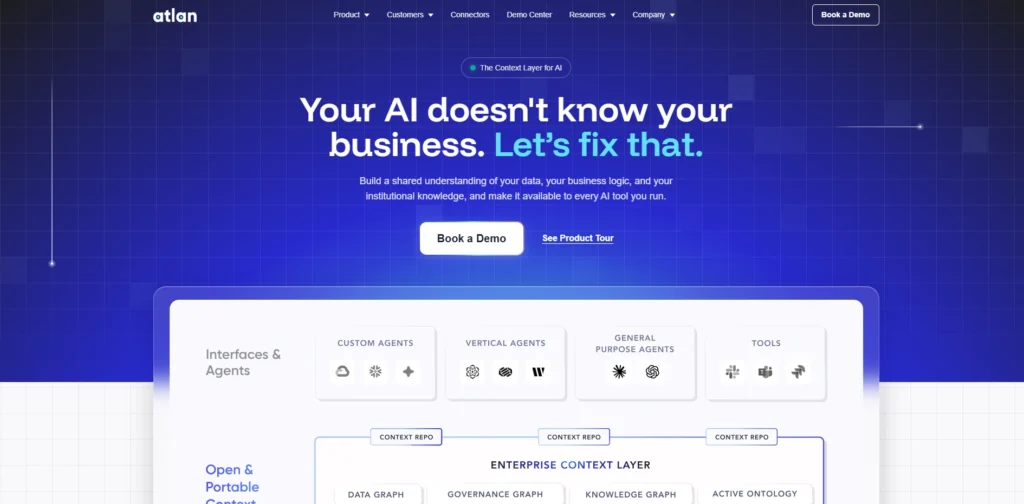
Atlan is a modern data workspace designed to help data teams manage, discover, and understand their data assets. It includes powerful data lineage tools capabilities that allow organizations to trace the journey of data from source systems through transformations and into analytics platforms. This helps teams understand dependencies and quickly troubleshoot data issues.
The platform is designed with collaboration in mind, allowing data engineers, analysts, and business users to work together within a shared data catalog. Atlan automatically captures lineage from various tools such as ETL pipelines, data warehouses, and BI platforms, providing clear visual representations of how data flows across the organization.
Top Features
- Automated end-to-end data lineage tracking
- Collaborative data catalog for teams
- Integration with modern data stack tools
- Metadata management and data discovery
- Impact analysis and governance support
Pros
- Collaborative workspace for technical and business teams
- Automated end-to-end data lineage tracking
- Clear visualizations of data flow and dependencies
- Integrates with ETL pipelines, data warehouses, and BI tools
- Helps troubleshoot issues and understand data transformations
Cons
- Can be expensive for smaller teams
- Some advanced features require technical expertise
- Learning curve for new users
- May require integration setup for complex environments
Pricing:
- Available on request
12. Secoda
Website:https://www.secoda.co/
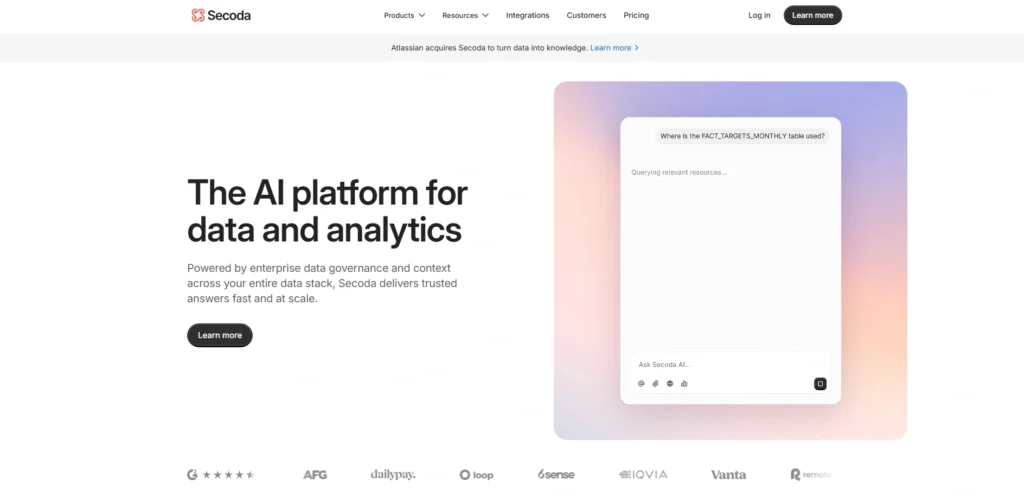
Secoda is a data discovery and lineage platform that helps teams easily understand and manage their data infrastructure. It provides automated data lineage visualization that shows how datasets are created, transformed, and used across different systems. This visibility allows organizations to maintain better data governance and ensure accuracy in analytics workflows.
The platform is designed to simplify data documentation and collaboration. Secoda automatically collects metadata from data warehouses, BI tools, and data pipelines, creating a centralized place where teams can explore data relationships and understand how information flows across their organization.
Top Features
- Automated data lineage visualization
- Centralized data catalog and documentation
- Metadata collection from multiple data sources
- Search and discovery for datasets
- Collaboration features for data teams
Pros
- Automated data lineage visualization
- Simplifies data discovery and documentation
- Centralized platform for metadata management
- Improves governance and analytics accuracy
- User-friendly interface for technical and business users
Cons
- Limited advanced features for large enterprises
- May require integration setup with multiple data sources
- Smaller community support compared to open-source tools
- Some features may be restricted in lower-tier plans
Pricing:
- Available on request
13. DataHub
Website:https://datahubproject.io/
DataHub is an open-source metadata platform originally developed by LinkedIn to manage and understand complex data ecosystems. It provides robust data lineage tools data lineage features that allow organizations to track how data flows between pipelines, datasets, and applications.
One of the main advantages of DataHub is its ability to provide real-time metadata updates and lineage insights. This helps teams maintain visibility into their data pipelines and quickly identify the impact of changes. The platform also supports strong governance and data discovery features, making it a popular choice for modern data teams.
Top Features
- Real-time metadata and lineage tracking
- Open-source and highly extensible platform
- Data discovery and catalog capabilities
- Integration with modern data stack tools
- Data governance and impact analysis
Pros
- Open-source and free to use
- Real-time metadata updates and lineage tracking
- Supports complex data ecosystems and pipelines
- Strong governance and data discovery features
- Extensible and integrates with modern data stack tools
Cons
- Requires technical expertise to set up and manage
- Limited built-in UI for non-technical users
- Integration may need customization for some platforms
- Smaller community compared to larger enterprise tools
Pricing:
- Available on request
14. Monte Carlo Data Observability Platform
Website:https://www.montecarlodata.com/
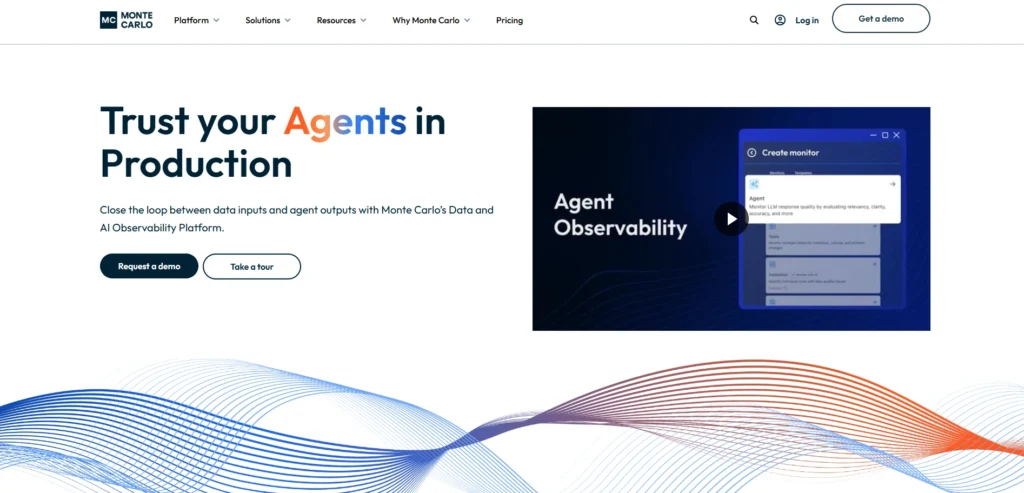
Monte Carlo is a data observability platform that also provides data lineage capabilities to help organizations monitor and understand their data pipelines. It tracks how data moves through different systems and helps teams detect anomalies or issues that may impact data quality.
By combining lineage with monitoring and alerting features, Monte Carlo enables data teams to quickly identify the root cause of data incidents. This improves reliability in analytics and business reporting while ensuring that organizations maintain high levels of data trust and transparency.
Top Features
- Data lineage and pipeline visibility
- Data observability and monitoring tools
- Automated anomaly detection
- Root cause analysis for data issues
- Integration with data warehouses and ETL tools
Pros:
- Full visibility of data pipelines
- Detects anomalies early
- Quick root cause analysis
- Improves data reliability and trust
- Supports transparency
Cons:
- Can be complex to set up
- May require extra resources
- Higher cost for smaller teams
- Some learning curve for advanced features
Pricing:
- Pay as you go
15.CastorDoc
Website:https://www.castordoc.com/
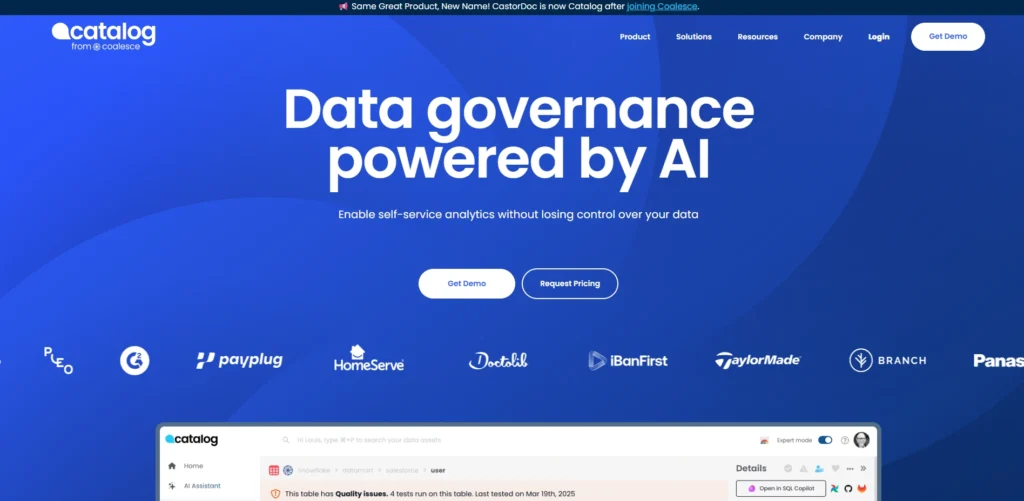
CastorDoc is a data catalog and governance platform that provides clear data lineage visualization for modern data teams. It helps organizations track how data moves across different databases, pipelines, and analytics tools, allowing teams to better understand the origin and transformation of datasets.
The platform focuses on improving data accessibility and collaboration. With automated lineage mapping and documentation features, data lineage tools CastorDoc enable data professionals to maintain transparency in their data processes and reduce confusion about how datasets are created and used..
Top Features
- Automated data lineage visualization
- Data catalog and documentation platform
- Metadata management and data discovery
- Integration with modern data stack tools
- Collaboration and governance features
Pros:
- Clear data lineage visualization
- Tracks data across databases, pipelines, and tools
- Improves data accessibility and collaboration
- Automated lineage mapping and documentation
- Enhances transparency in data processes
Cons:
- Setup and integration may be complex
- Could require additional resources for large datasets
- May have a learning curve for new users
- Potential cost considerations for smaller teams
Pricing:
- Available on request
Comparison Table
| Tool Name | Deployment Type | Key Capability | Best For | Integration Ecosystem |
| Apache Atlas | Open Source / On‑Prem | Metadata management & lineage tracking | Hadoop ecosystem governance | Hadoop, Hive, Spark |
| Collibra Data Intelligence Cloud | Cloud / Enterprise | Enterprise data governance & lineage | Large enterprise governance programs | BI tools, cloud data platforms |
| Informatica Enterprise Data Catalog | Cloud / On‑Prem | AI-powered metadata discovery | Enterprise data cataloging | Databases, ETL tools, cloud platforms |
| Microsoft Purview | Cloud | Unified data governance & lineage | Azure-based organizations | Azure, Power BI, SQL |
| Alation Data Catalog | Cloud / Hybrid | Data discovery and collaboration | Analytics and BI teams | Snowflake, Tableau, BI tools |
| IBM InfoSphere Information Governance Catalog | Enterprise / On‑Prem | Advanced governance and lineage | Large regulated industries | IBM data platforms |
| Apache Airflow | Open Source / Cloud | Workflow orchestration with lineage integrations | Data engineering pipelines | Python, Spark, cloud platforms |
| Talend Data Fabric | Cloud / Hybrid | Data integration with lineage tracking | Data integration projects | ETL tools, cloud warehouses |
| OvalEdge | Cloud / On‑Prem | Automated lineage & data catalog | Data governance teams | Databases, BI tools |
| OpenLineage | Open Source | Standardized lineage metadata framework | Modern data stacks | Airflow, Spark, data pipelines |
| Atlan | Cloud | Collaborative data workspace & lineage | Modern data teams | Snowflake, BigQuery, BI tools |
| Secoda | Cloud | Data discovery and documentation | Startups and modern data stacks | Data warehouses, BI tools |
| DataHub | Open Source / Cloud | Real-time metadata and lineage | Engineering-driven data teams | Kafka, Spark, modern stacks |
| Monte Carlo Data Observability | Cloud | Data observability with lineage insights | Monitoring data quality | Data warehouses, ETL tools |
| CastorDoc | Cloud | Data catalog with lineage visualization | Analytics teams and governance | BI tools, databases |
Conclusion
In conclusion, with the ever-increasing data systems, it is now more than ever crucial to understand the flow of data through various platforms. Hidden data can complicate the ability of teams to trust the information they have, deal with errors fast, or comprehend the effects of alterations in their data streams. That is why Data Lineage Tools are becoming a significant component of contemporary data management.
The right data lineage tool assists organisations to follow the entire path of their data, starting with the source and ending up with the report or dashboard. They are easier to use with visual lineage diagrams, automated metadata collection, and impact analysis features, and help data teams uphold transparency and enhance data governance.
The selection of the appropriate tool will vary based on your data environment, integration requirements and governance requirements. Application of any of the data lineage software described in this article will enable organizations to have a better control of their data pipelines, enhance their data quality and make their data-driven decisions more assured.
FAQs
1. Why Is Data Lineage Important?
Data lineage helps organizations understand their data flow, identify errors quickly, maintain data quality, and ensure compliance with regulatory requirements.
2. Who Uses Data Lineage Tools?
Data lineage platform are commonly used by data engineers, data analysts, data architects, and governance teams who need to monitor and manage data pipelines.
3. Are Data Lineage Software Only Used By Large Enterprises?
No, both small and large organizations can benefit from data lineage software, especially those working with complex data pipelines or multiple data platforms.
4. What Is The Difference Between Data Lineage And A Data Catalog?
A data catalog helps organize and discover data assets, while data lineage focuses on showing how data moves and changes across systems.
5. Can Data Lineage Tools Improve Data Governance?
Yes, data lineage platform support data governance by providing visibility into data usage, tracking transformations, and helping organizations maintain compliance with regulations.