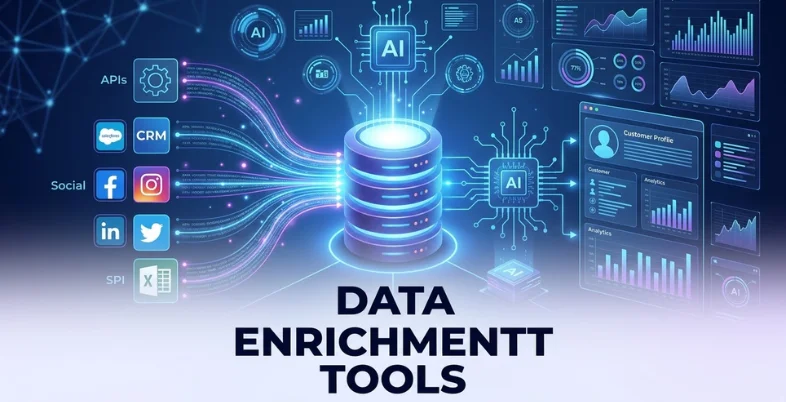
Every single day, modern businesses generate a staggering amount of customer data. Buyers leave detailed comments on social media advertisements, prospects click through interactive product tours on digital storefronts, and enterprise clients submit complex technical support tickets.
On the surface, this wealth of interaction looks like a massive advantage. However, for most organizations, this data is entirely siloed. The marketing team owns the social media sentiment, the sales team owns the product evaluation data, and the engineering team owns the infrastructure requests. When customer interactions remain trapped within departmental walls, they simply generate noise.
To achieve sustainable, scalable growth, businesses must stop treating customer interactions as isolated events. Instead, they must build structured systems to capture these fragmented signals, synthesize the data, and route it directly to the departments that can act on it. This is the process of turning raw customer interactions into true operational intelligence.
Capturing the Unstructured Frontline on Social Media
The very first touchpoint a customer has with a brand is rarely a structured intake form. More often than not, a buyer’s initial feedback occurs in the comment section of a paid social media advertisement or an organic post. Historically, companies viewed these comments simply as a metric of “engagement.” Today, however, they serve as a raw, unfiltered focus group. Prospects will openly state what they love about a product, point out confusing messaging in an ad, or complain about a missing feature.
Unfortunately, extracting this valuable operational intelligence is an incredibly tedious process if handled manually. Marketing teams attempting to moderate comment sections by hand are forced to sift through a massive mountain of internet noise. Trolls, automated spam bots, and irrelevant chatter make it nearly impossible to consistently spot genuine product signals. If a highly qualified buyer asks a critical technical question on a Facebook ad, and a human moderator doesn’t catch it before it gets pushed down by fifty spam comments, that operational intelligence is lost forever.
To solve this bottleneck, proactive teams face a clear choice: you can either continue to do it manually (draining hundreds of working hours while inevitably letting critical feedback slip through the cracks) or you can employ automated moderation tools. Just be sure to do your research before selecting the best social media moderation tool for you.
Customer feedback increasingly lives in these high-volume social comment threads, especially on Facebook and Instagram. By building an automation layer into their marketing stack, teams can instantly filter out the noise without human intervention. This allows them to easily aggregate legitimate customer questions, objections, and feature requests. This clean data can then be passed directly to the product team to inform future roadmaps or to the sales team to adjust their primary objection-handling scripts.
Related Blog: Best Customer Engagement Tools
Decoding Product Intent During the Evaluation Phase
Once a prospect moves past the social media layer and enters the evaluation phase, the nature of the customer interaction changes. They are no longer just leaving comments; they are actively testing the product.
In the software industry, the traditional method for evaluating product engagement involved forcing a prospect onto a live sales call. The sales representative would guide the prospect through the platform, manually taking notes on what features sparked interest and what workflows caused confusion. This manual process was inherently flawed. It relied entirely on human memory, and the feedback rarely made it out of the individual representative’s notebook.
Today, buyers demand self-serve education, and operations teams require scalable, standardized data. To achieve both, modern software companies are deploying interactive, self-guided product experiences directly on their websites.
Instead of relying on fragile staging servers that take weeks for engineering teams to build, growth teams are using demo sandbox environments. Think of this as a safe, isolated playground that perfectly mirrors your actual software interface. It allows prospects to freely click around, test different workflows, and experience the product’s value without any risk of breaking live production systems or requiring complex backend configurations.
When a prospect explores this simulated environment on their own time, every single interaction becomes a measurable data point. Because these sandboxes capture real HTML and CSS interactions, operations teams can track exactly where users engage, hesitate, or drop off. This effectively turns a standard product tour into a highly structured feedback channel.
If analytics reveal that eighty percent of users consistently abandon the product tour when they reach the “integration setup” step, the product team immediately gains a critical piece of operational intelligence. They do not have to guess why conversions are low; the interaction data explicitly tells them that the integration interface is too complex and requires an immediate redesign.
Translating Digital Signals into Physical Reliability
The concept of operational intelligence is not limited strictly to software or digital marketing. In fact, the most critical application of customer feedback often occurs when digital demands collide directly with physical, real-world infrastructure.
Consider the massive data centers that power cloud computing, or the automated manufacturing facilities that produce global consumer goods. The customers utilizing these services constantly provide feedback regarding speed, uptime, and delivery reliability. If a SaaS company experiences a spike in user growth, their customers will immediately demand faster server response times.
Fulfilling these digital expectations requires rigorous upgrades to heavy physical hardware. In hardware-dependent industries, feedback loops also influence infrastructure decisions. Reliable components from certified power resistor suppliers ensure that operational improvements translate into long-term system performance.
When a facility manager analyzes usage data and realizes their current power grid cannot safely handle the increased demand from their clients, they must act on that intelligence. By sourcing specialized industrial hardware, such as custom neutral grounding systems or heavy-duty load banks, they protect the facility from catastrophic electrical faults. In this scenario, operational intelligence successfully bridges the gap between a digital customer complaint about “slow load times” and the installation of a physical, two-ton industrial resistor on the factory floor.
Structuring the Cross-Functional Feedback Loop
Collecting clean data from social media, product demos, and infrastructure monitors is only the first step. To truly operate intelligently, an organization must build a cross-functional system that forces this data into the hands of decision-makers.
If you want to operationalize your customer interactions, your business should implement the following structural checkpoints:
- Establish a Centralized Data Repository: Do not allow marketing feedback to live exclusively in marketing software, or product feedback to live only in engineering tickets. Feed critical interaction signals into a centralized Customer Relationship Management (CRM) platform or a unified data warehouse where all department heads have full visibility.
- Appoint Departmental Data Stewards: Assign specific individuals in Marketing, Sales, and Product to act as data stewards. Their core responsibility is to review the aggregated customer interactions weekly, translate the raw data into business insights, and present those findings to the broader leadership team.
- Tie Feedback Directly to Product Roadmaps: Create a mandatory requirement that every new feature request or infrastructure upgrade must be backed by documented customer interaction data. If the engineering team wants to overhaul a feature, they must point to the specific drop-off metrics in the interactive demo or the aggregated support tickets to justify the sprint.
- Close the Loop with the Customer: Operational intelligence is a two-way street. When a customer’s social media comment or support ticket results in a tangible product improvement, the marketing team must communicate that update back to the market. This proves to the customer base that their interactions are actually valued, generating even more high-quality feedback in the future.
Moving from Passive Observation to Active Execution
Ultimately, data without an execution strategy is just digital clutter. The most successful modern businesses do not simply collect customer interactions; they weaponize them.
By filtering out the noise on social media, analyzing behavioral drop-offs during product evaluations, and ensuring their physical infrastructure can safely support their digital growth, organizations transform passive feedback into a competitive advantage when a company stops guessing what the market wants and starts building exactly what the interaction data dictates, operational efficiency and sustainable revenue growth naturally follow.
Continue Exploring: Best Voice of Customer (VoC) Tools