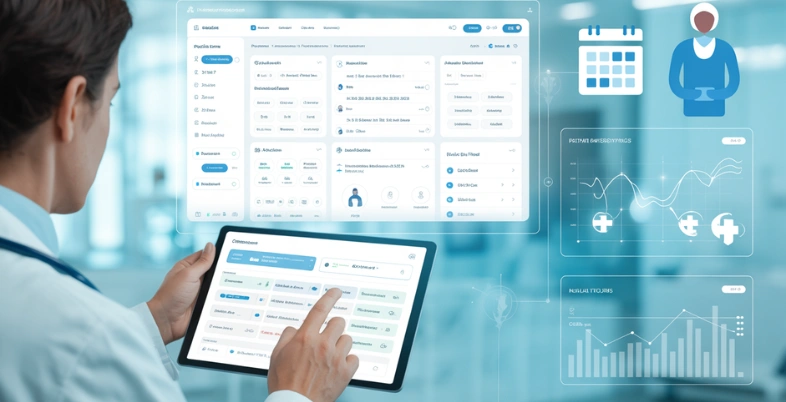
Healthcare systems today are rapidly evolving, driven by digital transformation and the growing demand for efficient, patient-centered care. From small clinics to large hospitals, providers are increasingly relying on technology to manage patient information, streamline operations, and improve treatment outcomes. As patient volumes rise and administrative tasks become more complex, traditional paper-based or fragmented systems are no longer sufficient.
Managing appointments, medical records, billing, and patient communication manually can lead to inefficiencies, errors, and reduced quality of care. Even minor mismanagement of patient data can impact clinical decisions and overall patient satisfaction.This is where Patient Management Software and AI tools for healthcare become essential. These solutions centralize healthcare operations, automate workflows, and enhance data accuracy.
Why Healthcare Providers Need Patient Management Systems
- Enhanced Patient Data Management: Centralizes Data, with records being accurate, secure and fast access to patient information available across departments and healthcare providers.
- Effective Appointment Scheduling: Automates the booking process, eliminates waiting times, lowers the error rates, and enhances the patient flow and the efficiency of overall clinic operations.
- Improved Care Coordination: Facilitates the smooth flow of communication between the healthcare personnel and enhances collaboration, treatment planning and continuity of patient care services.
- Lessened Administrative Burden: Automates the routine activities such as billing, documentation and reporting, and saves time thereby enabling the staff to concentrate on patient care.
- Enhanced Patient Engagement: Reciprocates portals, reminders, and communication tools, including VOC tools, assists the patients to remain updated, engaged, and content with their healthcare process.
- Proper Billing and Revenue Management: Optimizes the invoicing, insurance filing and payments, and cuts mistakes and enhances the financial performance of medical institutions.
- Data-Driven Decision Making: Provides analytics and reports, allowing providers to monitor their performance, find trends, and make evidence-based strategic healthcare choices.
- Regulatory Compliance and Security: Assures adherence to the healthcare regulations and ensures that sensitive patient information is secured by means of secure system and controlled access systems.
Considerations for Selecting Patient Management Software
- Ease of Use: Select intuitive software requiring minimal training, ensuring staff adoption, reduced errors, and smooth daily clinical and administrative workflows.
- Scalability and Flexibility: Choose software that grows with practice size, supporting additional users, locations, and features without major system upgrades.
- Integration Capabilities: Ensure compatibility with existing systems like EHR, billing, labs, and third-party applications for seamless data exchange and workflow efficiency.
- Data Security and Compliance: Verify strong encryption, access controls, and compliance automation tools to protect sensitive patient information from breaches.
- Customization Options: Look for configurable workflows, templates, and dashboards tailored to specialty-specific requirements and operational preferences of healthcare providers.
- Cost and Pricing Structure: Evaluate upfront costs, subscriptions, maintenance fees, and hidden charges to ensure affordability and long-term financial sustainability.
- Customer Support and Training: Reliable support, onboarding assistance, and training resources are essential for smooth implementation and ongoing system usage.
- Reporting and Analytics: Advanced reporting tools help track performance, optimize operations, and support data-driven decisions for improved patient care outcomes.
Comparison Table
| Name | EHR Integration | Integration Capabilities | Multi-Location Support | Ease of Use | Pricing |
| Epic Systems | Advanced & native | Extensive healthcare ecosystem | Yes | Moderate | Contact sales |
| Oracle Health | Advanced cloud-based | High with Oracle ecosystem | Yes | Moderate | Request pricing |
| athenahealth | Strong cloud EHR | Good third-party integrations | Yes | Easy | Contact sales |
| eClinicalWorks | Comprehensive EHR | Strong interoperability support | Yes | Moderate | Starts $449/month |
| NextGen Healthcare | Integrated EHR | High with specialty tools | Yes | Moderate | Contact sales |
| Veradigm | Integrated systems | Extensive data integrations | Yes | Complex | Contact sales |
| AdvancedMD | Built-in EHR | Good integrations available | Yes | Easy | Request pricing |
| CareCloud | Integrated EHR | Moderate integrations | Yes | Easy | Contact sales |
| Tebra | Integrated EHR | Marketing + clinical integrations | Yes | Easy | Contact sales |
| DrChrono | Strong EHR | API-based integrations | Yes | Easy | Starts $30/month |
| Greenway Health | Comprehensive EHR | Strong interoperability | Yes | Moderate | Contact sales |
| ModMed | Specialty EHR | Moderate integrations | Yes | Moderate | Contact sales |
| Docpulse | Cloud EMR | Basic integrations | Yes | Easy | Contact sales |
| Driefcase | Digital records system | ABDM ecosystem integration | Limited | Easy | Contact sales |
| OpenMRS | Open-source EHR | Highly customizable integrations | Yes | Complex | Free |
List of 15 Best Patient Management Software
1. Epic Systems
Website: https://www.epic.com/
Epic Systems is one of the most widely adopted patient management and electronic health record platforms globally, particularly among large hospitals and health systems. It offers a unified system for managing patient records, scheduling, billing, and clinical workflows. Known for its interoperability, Epic enables seamless data exchange across healthcare networks, improving care coordination and patient outcomes. It also provides advanced analytics, telehealth integration, and patient engagement tools through its MyChart portal. Epic consistently ranks among top EHR vendors for performance and usability, making it a preferred choice for enterprise-level healthcare organizations.
Key Features:
- Integrated electronic health records platform
- MyChart patient engagement portal
- Advanced clinical decision support tools
- Interoperability across healthcare networks
- Telehealth and remote care integration
- Real-time analytics and reporting
Pros:
- Highly scalable for large hospitals
- Strong interoperability capabilities
- Comprehensive feature-rich ecosystem
- Reliable performance and uptime
- Industry-leading patient portal
Cons:
- Expensive implementation and maintenance
- Requires extensive staff training
- Less suitable for small practices
Pricing:
- Contact sales
2. Oracle Health
Website: https://www.oracle.com/health/
Oracle Health is the healthcare division of Oracle, built upon the integration of Cerner’s capabilities to deliver advanced patient management and clinical solutions. It provides a comprehensive suite of tools including electronic health records, population health management, and data analytics powered by Oracle Cloud Infrastructure. Oracle Health emphasizes interoperability, security, and scalable cloud-based services to modernize healthcare systems. Its solutions enable providers to streamline workflows, enhance patient engagement, and gain real-time insights into clinical and operational data. By combining technology and data, Oracle Health aims to transform healthcare delivery and improve patient outcomes globally.
Key Features:
- Cloud-based electronic health records system
- Advanced population health management tools
- AI-driven analytics and insights engine
- Secure Oracle cloud infrastructure integration
- Interoperability across healthcare networks
- Clinical workflow automation capabilities
Pros:
- Backed by powerful Oracle ecosystem
- Strong cloud scalability and security
- Advanced analytics and AI features
- Suitable for large healthcare systems
- Continuous innovation and updates
Cons:
- High implementation and operational costs
- Complex setup and migration process
- Requires technical expertise for deployment
Pricing:
- Request Pricing
3. athenahealth
Website: https://www.athenahealth.com/
athenahealth is a cloud-based patient management software known for its all-in-one solution, athenaOne, which combines electronic health records, billing, and patient engagement tools. It is widely used by ambulatory practices for its ease of use and strong revenue cycle management capabilities. The platform leverages network-based insights to improve clinical and financial outcomes while automating administrative tasks. Features such as appointment scheduling, patient communication, and real-time data access enhance operational efficiency. Its cloud-native architecture eliminates the need for on-premise infrastructure, making it a flexible and scalable option for healthcare providers.
Key Features:
- Cloud-based EHR and billing system
- Automated revenue cycle management
- Patient communication tools integrated
- Appointment scheduling with reminders
- Network-based performance insights
- Mobile-friendly platform access
Pros:
- Easy to deploy cloud solution
- Strong billing and revenue tools
- User-friendly interface design
- Continuous updates and improvements
- Good support for small practices
Cons:
- Limited customization options available
- Subscription pricing can increase
- Internet dependency for access
Pricing:
- Contact sales
4. eClinicalWorks
Website: https://www.eclinicalworks.com/
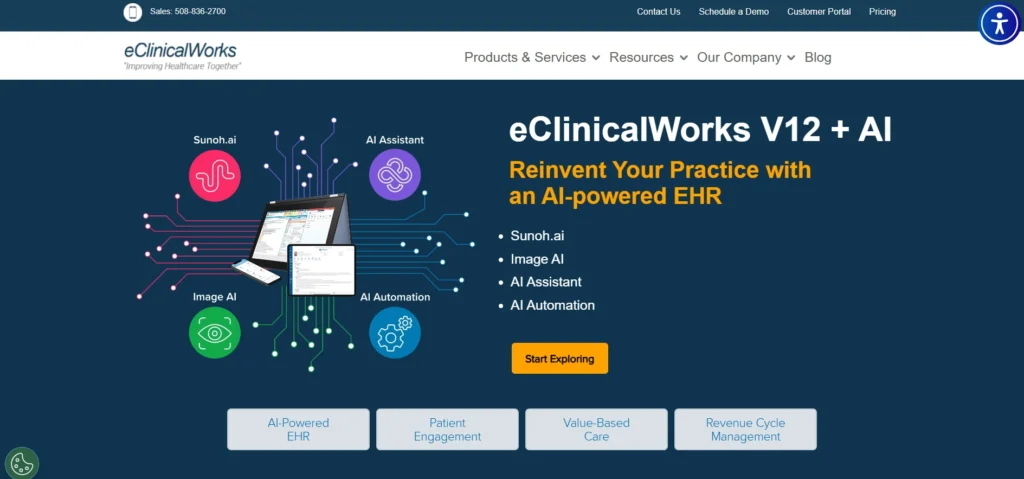
eClinicalWorks is a comprehensive patient management and electronic health record solution designed for small to large healthcare practices. It offers features such as appointment scheduling, telehealth, patient engagement tools, and revenue cycle management, making it one of the most efficient patient management tools available today. The platform integrates artificial intelligence to automate documentation and improve workflow efficiency. Its cloud-based system enables real-time access to patient data, enhancing care coordination. eClinicalWorks also supports interoperability, allowing providers to exchange patient information seamlessly. With continuous innovation and a focus on user-friendly interfaces, it has become a popular choice for healthcare organizations seeking efficient and scalable patient management solutions.
Key Features:
- AI-powered clinical documentation tools
- Telehealth integration with video consultations
- Patient engagement and messaging system
- Revenue cycle management features
- Cloud-based EHR accessibility
- Interoperability with healthcare networks
Pros:
- AI enhances workflow efficiency
- Comprehensive feature set offered
- Suitable for mid-sized practices
- Strong telehealth capabilities
- Regular feature updates provided
Cons:
- Customer support can vary
- Learning curve for beginners
- Occasional system performance issues
Pricing:
- EHR Only- $449/mo per provider
- EHR with Practice Management- $599/mo per provider
5. NextGen Healthcare
Website: https://www.nextgen.com/
NextGen Healthcare provides a robust patient management system tailored for ambulatory care practices. It integrates electronic health records, practice management, and patient engagement tools into a single platform. The software supports specialty-specific workflows, making it suitable for diverse medical practices. Its features include appointment scheduling, billing, analytics, and telehealth services, helping providers deliver efficient and personalized care. NextGen also emphasizes interoperability, enabling seamless data exchange between healthcare systems. With its focus on improving clinical outcomes and operational performance, the platform is widely adopted by mid-sized healthcare organizations seeking comprehensive patient management capabilities.
Key Features:
- Specialty-specific clinical workflows
- Integrated practice management system
- Telehealth and virtual care tools
- Advanced data analytics dashboards
- Patient portal for engagement
- Billing and revenue cycle automation
Pros:
- Tailored for specialty practices
- Strong reporting and analytics
- Integrated all-in-one platform
- Improves clinical efficiency
- Scalable for growing practices
Cons:
- Interface may feel complex
- Setup requires technical expertise
- Pricing not transparent
Pricing:
- Contact sales
6. Veradigm
Website: https://veradigm.com/
Veradigm is a healthcare technology and data solutions company that provides patient management, analytics, and interoperability tools for providers, payers, and life sciences organizations, positioning it among advanced patient management tools in the healthcare industry. It offers electronic health record integration, population health management, and real-world data insights to improve clinical and financial outcomes. Veradigm focuses on connecting healthcare stakeholders through data-driven solutions that enhance care coordination and decision-making. Its platforms support value-based care initiatives and regulatory compliance while optimizing workflows. By leveraging advanced analytics and extensive healthcare datasets, Veradigm helps organizations deliver better patient outcomes and operational efficiency across diverse healthcare ecosystems globally.
Key Features:
- Real-world healthcare data analytics platform
- EHR integration with multiple systems
- Population health management solutions
- Value-based care support tools
- Interoperability and data exchange network
- Life sciences and payer solutions
Pros:
- Strong data analytics capabilities
- Supports value-based care initiatives
- Broad healthcare ecosystem connectivity
- Reliable interoperability framework
- Useful for research and insights
Cons:
- Complex platform for beginners
- Requires data expertise to maximize
- Limited focus on small practices
Pricing:
- Contact sales
7. AdvancedMD
Website: https://www.advancedmd.com/
AdvancedMD is a cloud-based patient management platform designed for independent practices and mid-sized healthcare organizations. It combines electronic health records, practice management, and billing tools into a single integrated system. The software offers features such as appointment scheduling, telemedicine, patient portals, and reporting tools. Its intuitive interface simplifies administrative tasks, allowing providers to focus on patient care. AdvancedMD also supports mobile access, enabling healthcare professionals to manage patient data on the go. With its scalable and user-friendly design, it is a popular choice for practices seeking efficient and cost-effective patient management solutions.
Key Features:
- Cloud-based practice management system
- Integrated telemedicine capabilities
- Billing and revenue cycle tools
- Patient portal for communication
- Mobile app for remote access
- Customizable reporting dashboards
Pros:
- Easy cloud-based deployment
- Strong billing functionality included
- User-friendly interface design
- Good mobile accessibility features
- Suitable for small practices
Cons:
- Limited advanced customization
- Occasional system lag issues
- Add-ons increase overall cost
Pricing:
- Request Pricing
8. CareCloud
Website: https://carecloud.com/
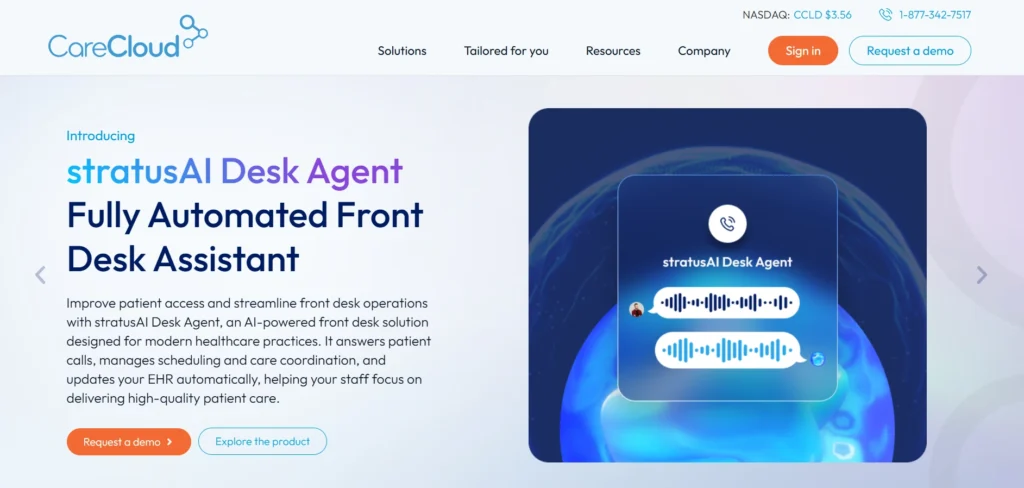
CareCloud is a modern patient management software that focuses on delivering intuitive and efficient healthcare solutions. It offers a comprehensive suite of tools, including electronic health records, practice management, billing, and analytics. The platform is known for its user-friendly interface and customizable dashboards, which provide real-time insights into patient data and operational performance. CareCloud also supports telehealth and patient engagement features, improving accessibility and communication. Its cloud-based infrastructure ensures scalability and data security, making it suitable for small to mid-sized practices looking to enhance efficiency and patient care delivery.
Key Features:
- Intuitive user interface design
- Real-time analytics and dashboards
- Integrated billing and EHR system
- Telehealth and remote care tools
- Practice management automation features
- Cloud-based secure infrastructure
Pros:
- Modern and intuitive interface
- Strong analytics and reporting
- Flexible cloud-based solution
- Good customer onboarding experience
- Ideal for mid-sized clinics
Cons:
- Pricing can be higher
- Limited offline functionality
- Customization may be restricted
Pricing:
- Contact sales
9. Tebra
Website: https://www.tebra.com/
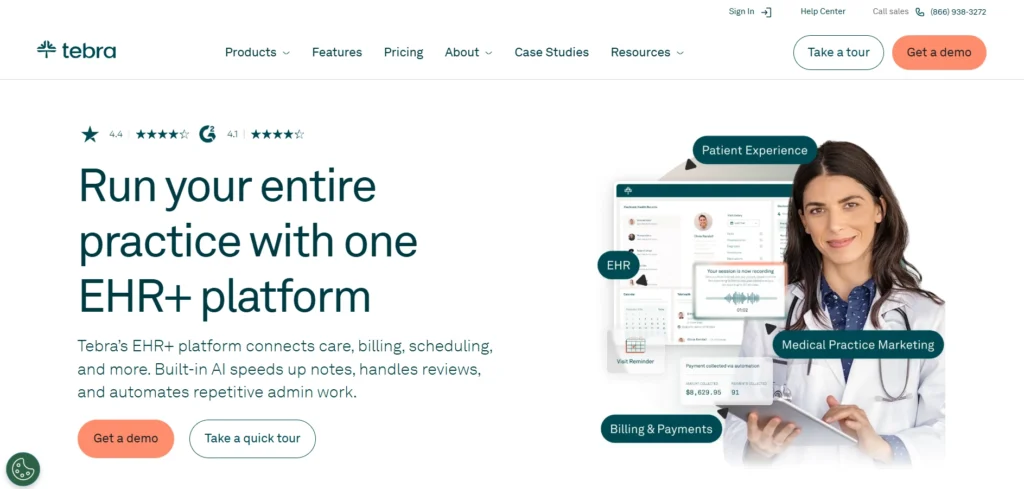
Tebra is a modern patient management and practice automation platform formed through the merger of Kareo and PatientPop, designed to support independent healthcare practices. It combines electronic health records, billing, patient communication, and marketing tools into a unified cloud-based system. Tebra focuses on improving patient acquisition, engagement, and retention through digital front-door capabilities such as online booking, reviews, and messaging. Its intuitive interface simplifies administrative workflows while enhancing revenue cycle performance. With integrated analytics and automation features, Tebra enables practices to streamline operations, improve patient experiences, and grow sustainably in a competitive healthcare environment.
Key Features:
- Integrated EHR and billing platform
- Patient acquisition and marketing tools
- Online appointment booking system
- Automated workflows in patient management tools
- Reputation management and reviews tracking
- Practice performance analytics dashboard
Pros:
- Combines clinical and marketing tools
- Ideal for the growth of independent practices
- User-friendly and modern interface
- Strong patient engagement capabilities
- Streamlined revenue cycle management
Cons:
- Limited enterprise-level scalability
- Pricing may increase with add-ons
- Depends heavily on internet connectivity
Pricing:
- Contact sales
10. DrChrono
Website: https://www.drchrono.com/
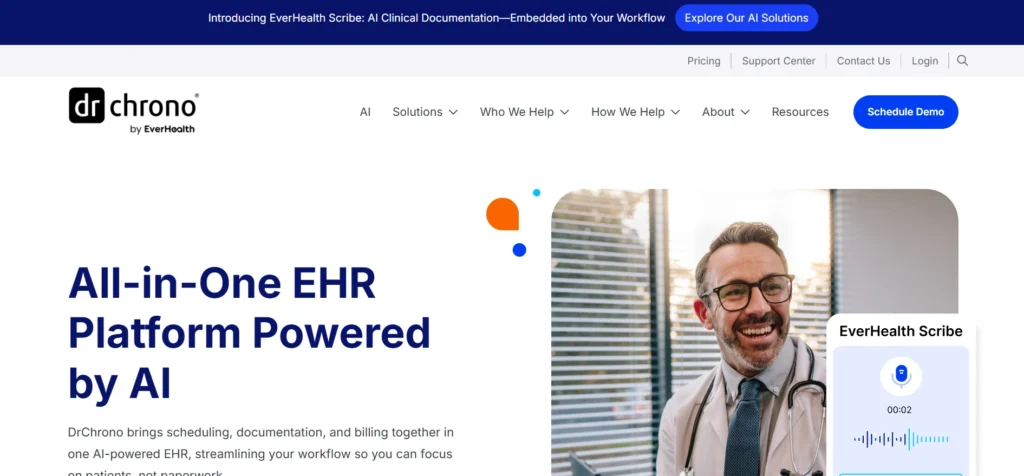
DrChrono is a flexible and customizable patient management software designed for modern healthcare practices. It offers electronic health records, practice management, billing, and telehealth solutions in a single platform. Known for its mobile-first approach, DrChrono allows providers to access patient data and manage workflows from smartphones and tablets. The platform supports customizable templates and specialty-specific features, making it adaptable to various medical practices. Its integration capabilities enable seamless data sharing, while its intuitive interface enhances usability. DrChrono is particularly popular among small to mid-sized practices seeking a modern and efficient patient management system.
Key Features:
- Mobile-first EHR platform design
- Customizable clinical templates system
- Telehealth video consultation features
- Integrated billing and scheduling tools
- Apple device compatibility support
- API integrations with other tools
Pros:
- Strong mobile usability features
- Highly customizable templates
- Good integration capabilities
- Ideal for modern practices
- Efficient workflow automation
Cons:
- Pricing can be premium
- Requires stable internet connection
- Limited offline functionality
Pricing:
- $30 per provider per month
11. Greenway Health
Website: https://www.greenwayhealth.com/
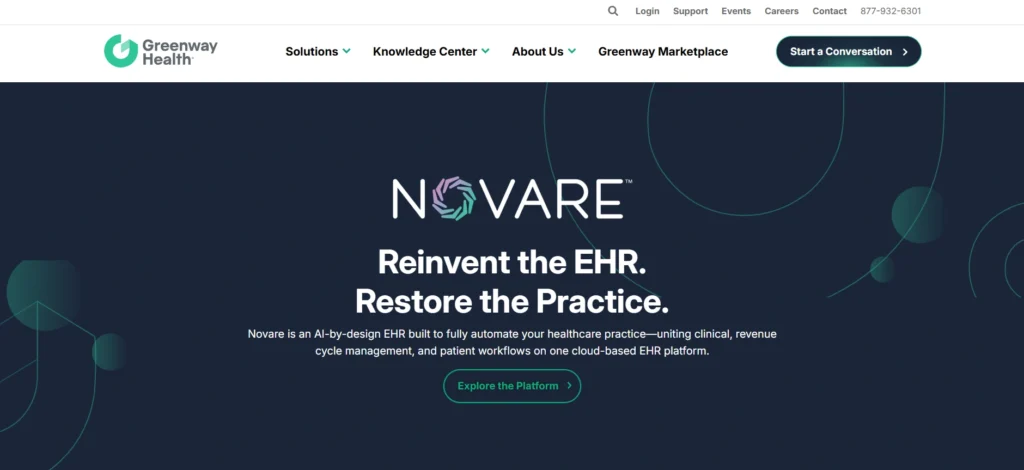
Greenway Health provides a comprehensive patient management platform focused on improving clinical, financial, and operational performance, making it one of the reliable patient management tools for healthcare providers. It offers electronic health records, practice management, and patient engagement tools designed to streamline healthcare workflows. The platform emphasizes interoperability, enabling seamless data exchange across healthcare systems. Greenway Health also includes analytics and reporting features that help providers make data-driven decisions. Its solutions are tailored to various specialties, ensuring flexibility and efficiency. With a focus on enhancing patient care and operational efficiency, Greenway Health is a trusted choice for healthcare organizations seeking integrated management solutions.
Key Features:
- Integrated EHR and practice management
- Patient engagement tools included
- Interoperability with healthcare systems
- Data analytics and reporting tools
- Specialty-focused workflow solutions
- Revenue cycle management support
Pros:
- Comprehensive healthcare solution
- Strong interoperability capabilities
- Good specialty-specific features
- Reliable reporting and analytics
- Improves operational efficiency
Cons:
- Interface could be improved
- Implementation can take time
- Higher cost for smaller clinics
Pricing:
- Contact sales
12. ModMed
Website: https://www.modmed.com/
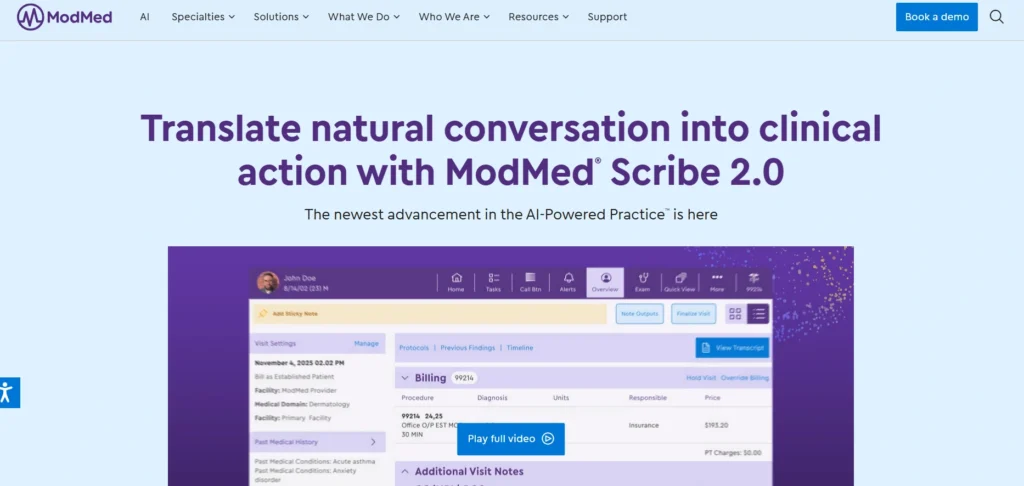
ModMed, also known as Modernizing Medicine, provides specialty-specific patient management solutions powered by artificial intelligence and cloud technology, making it one of the advanced patient management tools for modern healthcare practices. The platform offers electronic health records, practice management, and revenue cycle tools tailored to different medical specialties. Its AI-driven features enhance clinical documentation and workflow efficiency. ModMed also supports telehealth and patient engagement, improving accessibility and communication. The software is designed to adapt to unique practice needs, making it highly customizable. With its focus on innovation and specialty care, ModMed is widely used by healthcare providers seeking advanced and tailored patient management solutions.
Key Features:
- AI-powered clinical documentation tools
- Specialty-specific EHR workflows
- Integrated practice management system
- Telehealth and patient engagement tools
- Cloud-based secure data storage
- Analytics for performance insights
Pros:
- Strong AI-driven automation features
- Designed for specialty practices
- Modern and user-friendly interface
- Improves documentation efficiency
- Scalable cloud-based platform
Cons:
- Premium pricing structure
- Limited customization flexibility
- Requires training for adoption
Pricing:
- Contact sales
13. Docpulse
Website: https://docpulse.com/
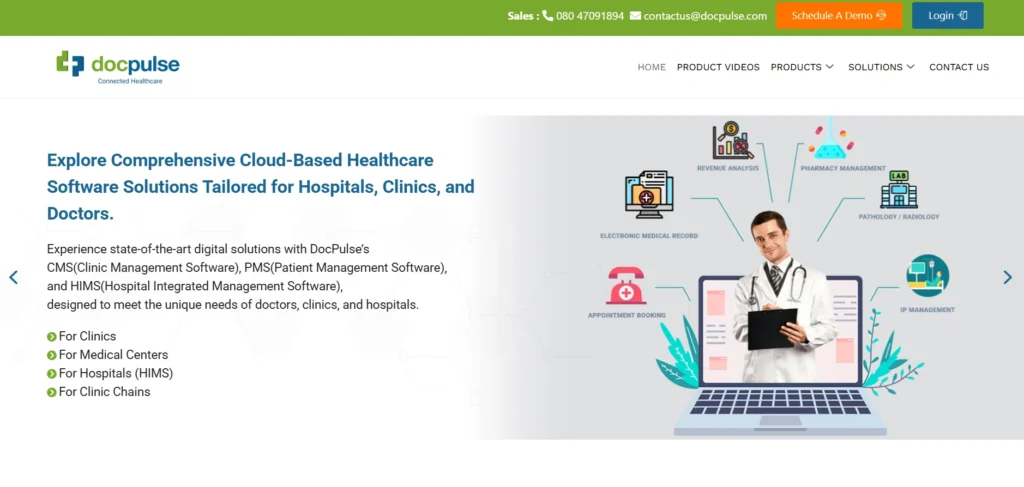
Docpulse is a cloud-based patient management software designed for clinics and healthcare providers seeking affordable and efficient solutions. It offers features such as electronic medical records, appointment scheduling, billing, and teleconsultation. The platform is particularly popular in emerging markets due to its cost-effectiveness and ease of use. Docpulse also supports patient engagement through reminders and communication tools. Its scalable design allows clinics to expand their operations without significant infrastructure investments. By simplifying administrative tasks and improving patient care, Docpulse serves as a practical solution for small to mid-sized healthcare practices.
Key Features:
- Cloud-based EMR system
- Appointment scheduling with reminders
- Teleconsultation and video calling
- Billing and invoicing tools
- Patient engagement communication features
- Multi-location clinic management
Pros:
- Affordable pricing for clinics
- Easy to implement and use
- Good for emerging markets
- Supports multi-clinic operations
- Lightweight and efficient system
Cons:
- Limited advanced analytics features
- Basic customization options
- Smaller global presence
Pricing:
- Contact sales
14. Driefcase
Website: https://www.driefcase.com/
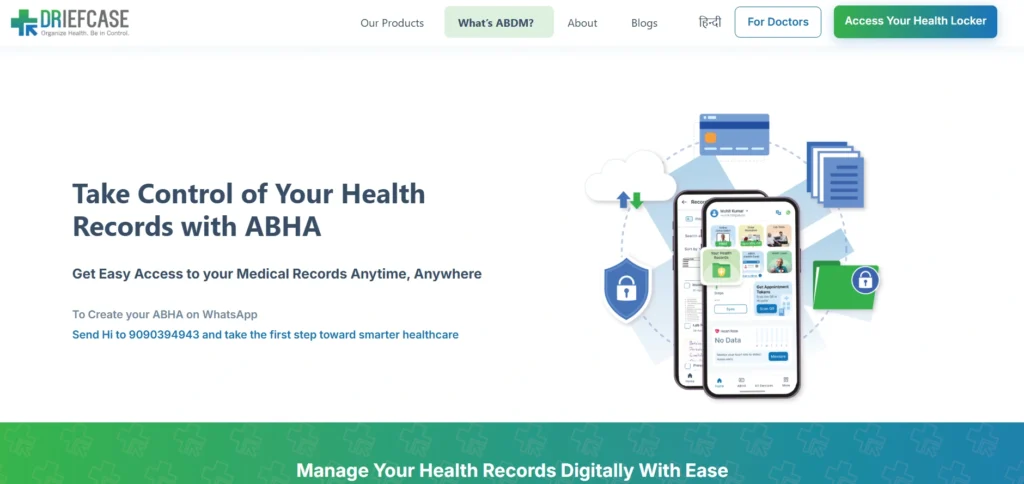
Driefcase is an innovative patient management platform focused on digital health records and interoperability within healthcare ecosystems. It enables patients to store, access, and share their medical records securely across healthcare providers. The platform integrates with national health systems, supporting seamless data exchange and improving continuity of care. Driefcase also offers features such as appointment management, health tracking, and document storage. Its user-centric approach empowers patients while simplifying administrative processes for providers. Particularly popular in India, Driefcase plays a key role in advancing digital healthcare infrastructure and improving patient data accessibility.
Key Features:
- Digital health records storage system
- ABDM integration for interoperability
- Secure document sharing capabilities
- Patient health tracking features
- Appointment management tools
- Mobile app accessibility support
Pros:
- Strong focus on Indian healthcare
- Secure digital record management
- Easy patient data sharing
- Supports national health ecosystem
- Simple and user-friendly interface
Cons:
- Limited enterprise-level features
- Still growing platform capabilities
- Less suitable for large hospitals
Pricing:
- Contact sales
15. OpenMRS
Website: https://openmrs.org/
OpenMRS is an open-source patient management system widely used in developing countries and global health initiatives. It provides a flexible platform for managing electronic medical records, patient data, and clinical workflows. The software is highly customizable, allowing organizations to adapt it to their specific healthcare needs. OpenMRS supports interoperability and integrates with various health systems, improving care coordination. Its community-driven development model ensures continuous innovation and support. With its affordability and scalability, OpenMRS is an ideal solution for healthcare providers seeking cost-effective and adaptable patient management software.
Key Features:
- Open-source EMR platform
- Highly customizable modular system
- Community-driven development support
- Patient data management tools
- Integration with global health systems
- Scalable for diverse environments
Pros:
- Completely free and open-source
- Highly customizable platform
- Strong global community support
- Ideal for developing regions
- Flexible deployment options
Cons:
- Requires technical expertise setup
- Limited official support services
- Not plug-and-play solution
Pricing:
- Open source
Ending Thoughts
Patient management software has become an essential component of modern healthcare, enabling providers to streamline operations, enhance patient experiences, and improve clinical outcomes. By integrating administrative, financial, and clinical processes into a single platform, these systems reduce inefficiencies and support better decision-making. From small clinics to large hospitals, adopting the right solution can significantly impact productivity and care quality. However, selecting the most suitable software requires careful evaluation of features, scalability, security, and cost. As healthcare continues to evolve digitally, investing in a reliable patient management system ensures long-term growth, regulatory compliance, and the ability to deliver efficient, patient-centered care in an increasingly competitive and data-driven environment.
FAQs
1. What Is Patient Management Software?
It is a digital system used to manage patient records, appointments, billing, and healthcare workflows efficiently.
2. Who Should Use Patient Management Tools?
Hospitals, clinics, diagnostic centers, and individual practitioners can use it to streamline operations and improve patient care.
3. Is Patient Management Software Secure?
Yes, most systems use encryption, access controls, and comply with healthcare regulations to protect sensitive patient data.
4. Can It Integrate With Other Healthcare Tools?
Most modern solutions integrate with EHRs, billing systems, labs, and telehealth platforms for seamless data exchange.
5. Is It Suitable For Small Clinics?
Yes, many cloud-based solutions are affordable, scalable, and specifically designed for small and mid-sized healthcare practices.