
Thinking About Launching an Uber-like App?
You’re not alone. Ride-hailing isn’t going away anytime soon. In fact, it’s expanding into new corners every year: city taxis, bike rides for college towns, corporate employee transport, rental fleets for tourists, even hyperlocal shuttle services. The appetite is still there.
But let me tell you something most glossy startup articles won’t.
It’s rarely the idea that kills a ride-hailing startup.
It’s the vendor’s choice.
I’ve seen founders with funding, strategy, and solid market research still stumble. Not because the concept was weak but because they trusted the wrong development partner. And fixing a bad tech partnership? That’s expensive.
White-label Uber-like app solutions sound like the easy road. Faster launch. Lower cost. Less complexity. And yes, they can absolutely deliver those benefits.
But only if you choose carefully.
This guide isn’t about hype. It’s about helping you avoid mistakes that can quietly damage your business before it even gains traction.
Why White-Label Uber-Like Solutions Make Practical Sense
Building a ride-hailing platform from zero is no small project.
You’re usually looking at eight to twelve months of development time. That means hiring mobile developers, backend engineers, UI designers, testers, and probably a DevOps specialist for server infrastructure. On top of that, you’ll need continuous updates, performance monitoring, and bug fixes. Mobile operating systems change frequently, and each update can create compatibility issues.
For many startups, that timeline and cost simply don’t work.
White-label solutions change the structure. Instead of building every component yourself, you’re customizing an existing, already-built framework. Core features like booking flow, driver management, GPS tracking, payment processing, and admin dashboards are pre-developed.
That cuts months off your launch schedule. It reduces initial investment. And it gives you something functional much faster.
The challenge isn’t whether white-label is useful. The challenge is choosing a vendor whose product is actually stable and scalable.
This is why many startups begin by building a smaller version of their product to test the idea before full-scale development. Working with teams that offer MVP development services helps businesses launch faster, validate their concept, and reduce early-stage risk.
Step 1: Be Clear About Your Business Model First
Before you even send an inquiry email, sit down and define your plan.
Do you plan to launch in one city? Or are you planning to launch it across multiple regions? Does your app focus only on taxis, or include bikes and rentals? Do you need multi-currency capability? Will drivers register openly, or will you approve them manually?
If you don’t define these things early, vendors will present their standard package. And their standard package might not match your vision.
Clarifying this help you save on your budget and ensures you’re not paying for features you don’t need yet.
Step 2: Don’t Judge Product by the Demo
Nearly all vendors have well-executed demos. Clean interface. Smooth booking simulation. Perfect ride completion flow.
But a demo is controlled. It doesn’t reflect real-world stress.
Instead, ask for live app store links. Download their deployed apps and explore them yourself. Check reviews. Ask for real client examples. Request a walkthrough of the admin panel not screenshots, but actual live access or a live demo call.
If a vendor only shares recorded videos or basic images, you should investigate further as you’re investing in a business.
Step 3: Understand What “White-Label” is Actually
The term “white-label” can be misleading.
For some vendors, it means you can change the logo and app colors. That’s it.
For others, it includes workflow customization, feature adjustments, payment gateway integration, language additions, and multi-service support.
Enquire about what modifications are included in the basic package. Determine requiring additional expenditure. Confirm that the source code is included with your purchase and ask if you’ve got hosting on their servers and migration terms.
These parameters have a direct impact on how much control you have over your platform.
Step 4: Ask About the Technology
To understand the basics of how your app works even if you’re not technical is always important.
Basically, Uber-like solutions include native Android and iOS applications, a scalable backend framework such as Node.js or Laravel, cloud hosting compatibility, secure payment integration, and real-time GPS tracking using Google Maps or similar platforms.
Even if you don’t understand the coding, ask what technology they use for clear explanations, which reflect experience and ownership. Unsatisfied answers often suggest limited depth or heavy outsourcing.
Uber Technologies is the backbone of your platform. Weak infrastructure becomes visible once your user grows.
Step 5: Look for Pricing Structure
White-label vendors generally offer one-time license fees, subscription-based pricing, revenue-sharing models, or fully custom development packages.
Be cautious with low prices. Those solutions often mean limited support, no future updates, security vulnerabilities, or scalability issues later.
Ask about upgrade costs. Confirm server hosting charges. Understand whether app store publishing is included. Transparent pricing reflects professionalism. Unclear pricing often leads to conflict later.
Step 6: Consider Compliance and Requirements
Ride-hailing companies operate in regulated contexts.
You may need to verify driver documents, do identification checks, configure taxes, and ensure data privacy.
While a vendor’s system cannot replace legal counsel, it should enable you to handle document uploads and driver approvals, as well as provide data privacy options. Features such as KYC integration and administrative control are critical.
Step 7: Evaluate Post-Launch Support Seriously
The launch date feels significant. It’s exciting. But this is merely the beginning.
Following launch, you may require app upgrades, bug fixes, security patches, server monitoring, and feature enhancements. Operating systems are routinely updated, and compatibility difficulties may arise unexpectedly.
Enquire with vendors about the duration of support provided. Check whether they offer an Annual Maintenance Contract and what their response time is for technical problems.
Strong post-launch support ensures stability. Weak support increases risk.
Top White-Label Uber-Like App Development Companies
Below is a list of known vendors offering Uber-style white-label or clone solutions.
1. Uberclone.co
Overview
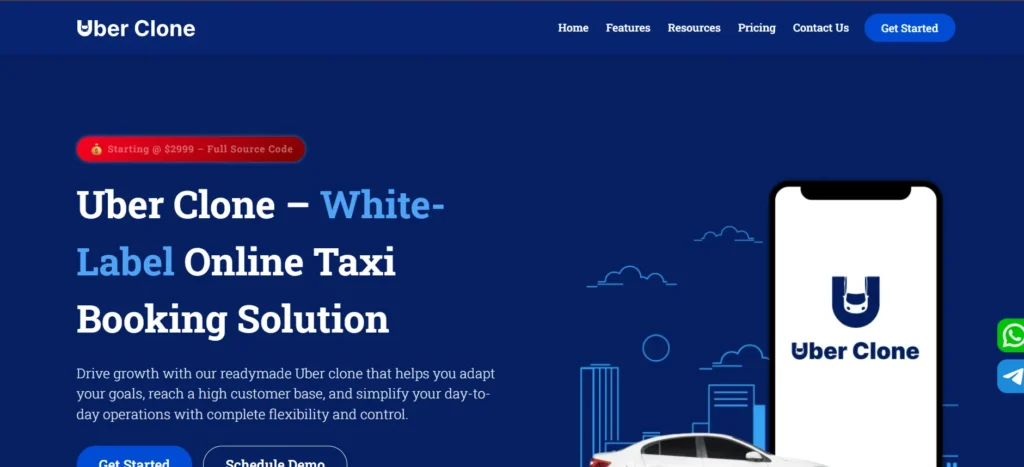
Uberclone.co positions itself as a provider of ready-made Uber-style scripts for ride-hailing and other on-demand services.
Key Strengths
- Pre-built ride-hailing architecture
- White-label branding
- Multi-service extension options
- Faster deployment timeline
Best For
Startups that want a ready framework and plan to launch quickly with customization.
2. Elluminati
Overview
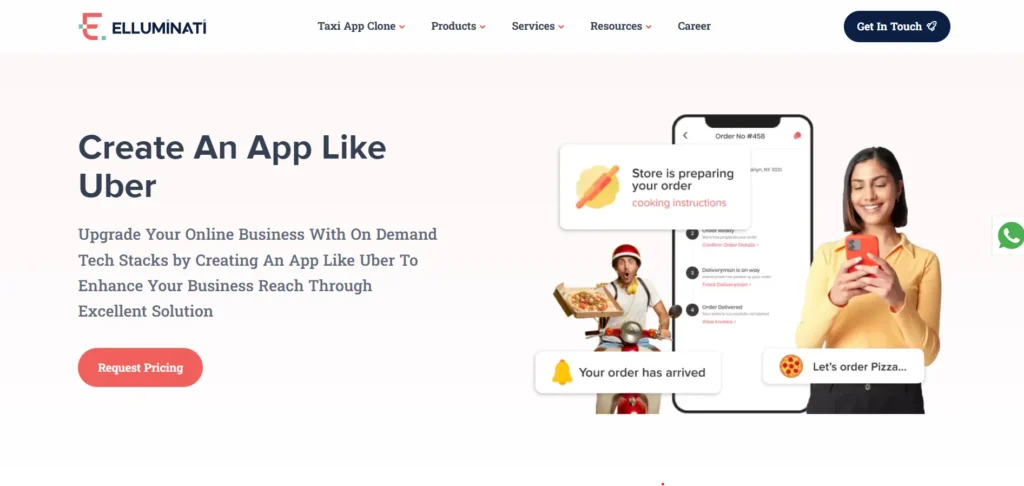
Elluminati works in the on-demand app development space and offers taxi booking, delivery, and service marketplace solutions.
Key Strengths
- Multi-service platform options
- Business consultation approach
- Custom feature integration
- Flexible script modification
Best For
Entrepreneurs planning long-term scaling or multi-service platforms.
3. Appicial Applications
Overview
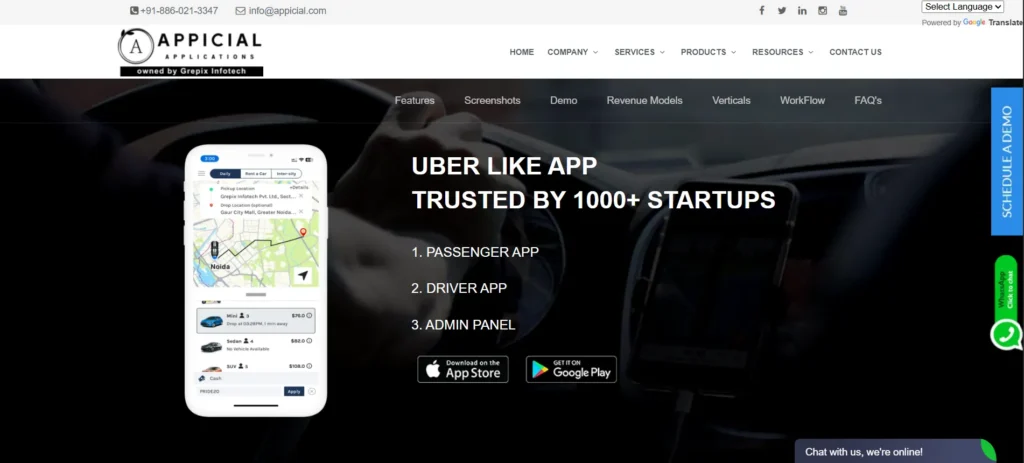
Appicial has been around in the taxi software space for quite some time, and you can kind of tell they understand how traditional taxi businesses operate. They mainly focus on white-label taxi booking and dispatch systems, especially for operators who are moving from phone-call bookings and manual logs to something more digital and structured. It’s less about flashy innovation and more about helping taxi businesses modernize without chaos.
Key Strengths
- Works across multiple countries, which helps operators planning to expand
- Lets businesses fully brand the app as their own
- Includes practical fleet and dispatch management tools
- Has steady experience specifically in taxi-focused software
Best For
Taxi companies or fleet owners who are tired of spreadsheets and phone bookings and want to shift into a proper digital system without rebuilding everything from zero.
4. V3Cube
Overview
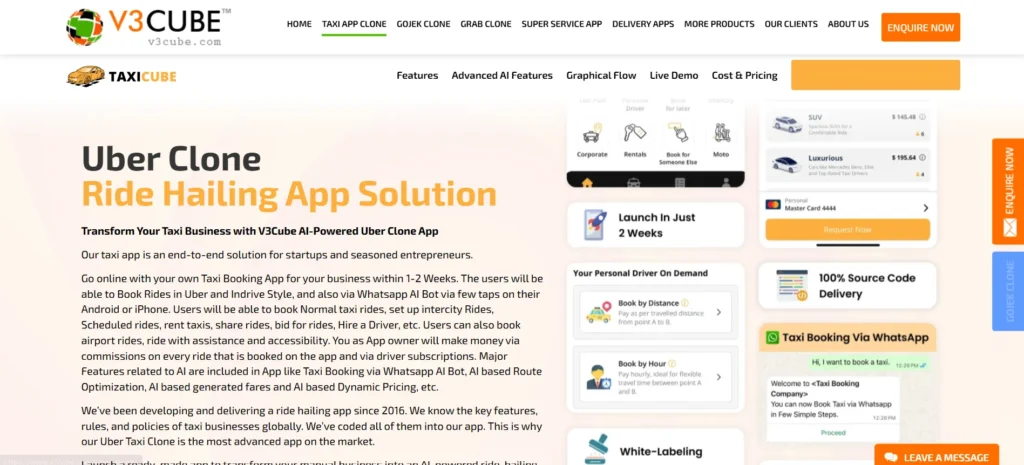
V3Cube is one of those companies that goes big on features. If you look at their product list, it’s usually long. Really long. They focus on Uber-like and multi-service platforms and tend to position themselves toward businesses that want a wide feature set from day one instead of slowly adding things later.
Key Strengths
- A large built-in feature catalog
- Multi-language and multi-currency support, useful for international launches
- Packages designed for larger operations rather than small pilots
- Strong focus on scalability
Best For
Founders aiming at global or multi-country markets, especially those who already have funding and want a more “enterprise-style” setup instead of a basic MVP.
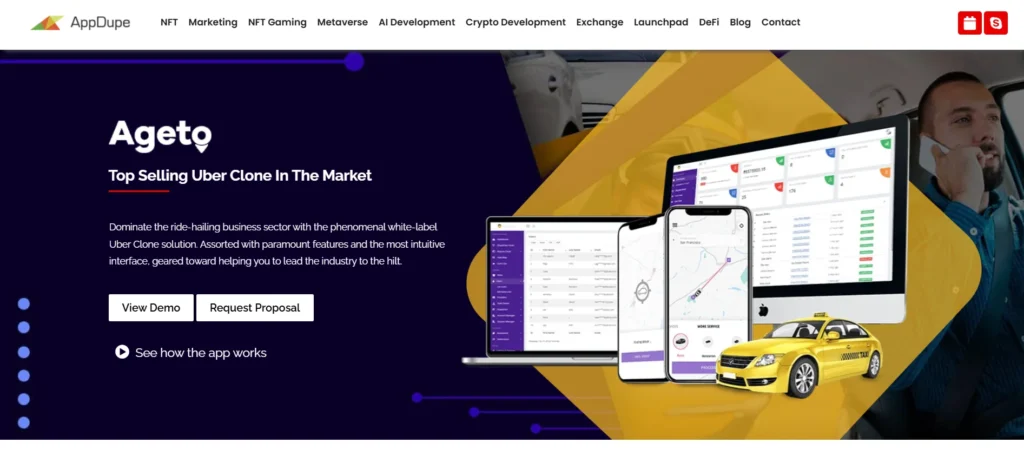
5. AppDupe
Overview
AppDupe works in both clone-based and custom ride-hailing solutions. So if someone wants to launch quickly using a ready-made framework, they can.
Key Strengths
- Quick-launch clone app model for faster go-to-market
- Option for custom development when needed
- Supports multiple service verticals, not just ride-hailing
- Flexible approach depending on business requirements
Best For
Startups that don’t want to overcomplicate things at the beginning but still want the option to customize or expand their platform later on.
Final Checklist Before Signing
Before signing any agreement, confirm the scope of work in writing. Ensure the feature list is documented. Clarify customization timelines, support duration, payment structure, and discuss design tools and creative software alternatives that may be used for UI/UX development to avoid unexpected licensing costs.
- Do not rely on verbal promises.
- Documentation protects both parties.
Conclusion
Choosing a white-label Uber-like app vendor is not just a technical task. It’s a fundamental business decision.
The right provider will understand your market, be transparent about restrictions, and offer coordinated ongoing support.
So compare options carefully. Ask direct questions. In ride-hailing, technology alone is not your competitive advantage.
Execution is and execution begins with selecting the right development partner.